
No surprises along the way.
Every project - from a one-off website to a subscription product - goes through the same, clear process. Staging, the repository and a dated schedule are visible from day one, not at the end.
First contact, a workshop and a quote
You write to us or we set up a short call. Instead of asking about your budget, we break the project down: what it has to do, who for, and what happens if we do not build it. A quote and initial scope come back within an hour.
- You talk to the person who will write the code
- A quote with concrete scope, not a range
- No pressure to decide fast

Onboarding in the client panel
You get an account in the client panel where you see progress, files, invoices and tickets as they happen. Everything is visible to both sides from day one - below is what you actually look at inside.
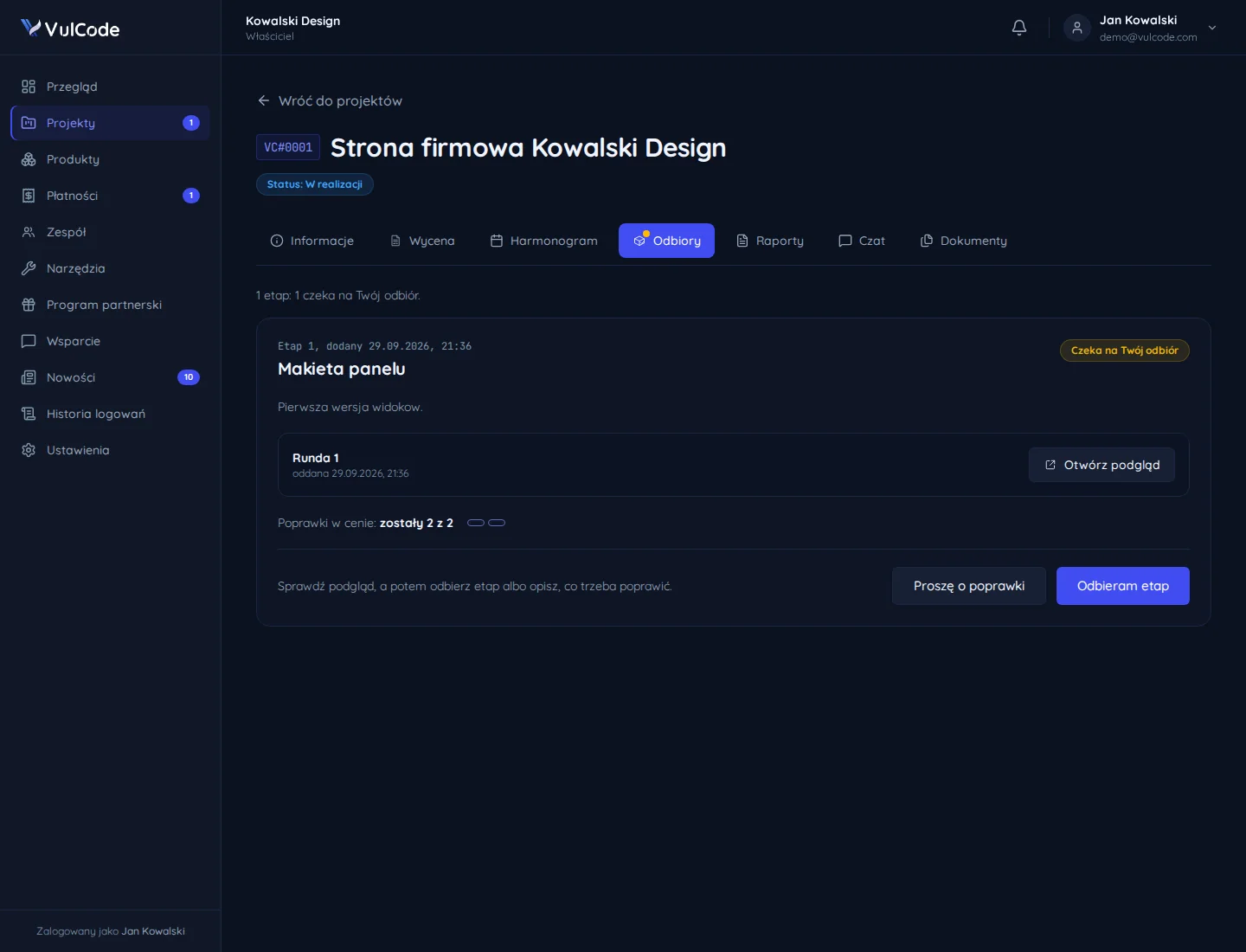
After logging in you see one screen with the project status: what is done, what is in progress and what comes next. No chasing over email - the status is always at hand and current for both sides.
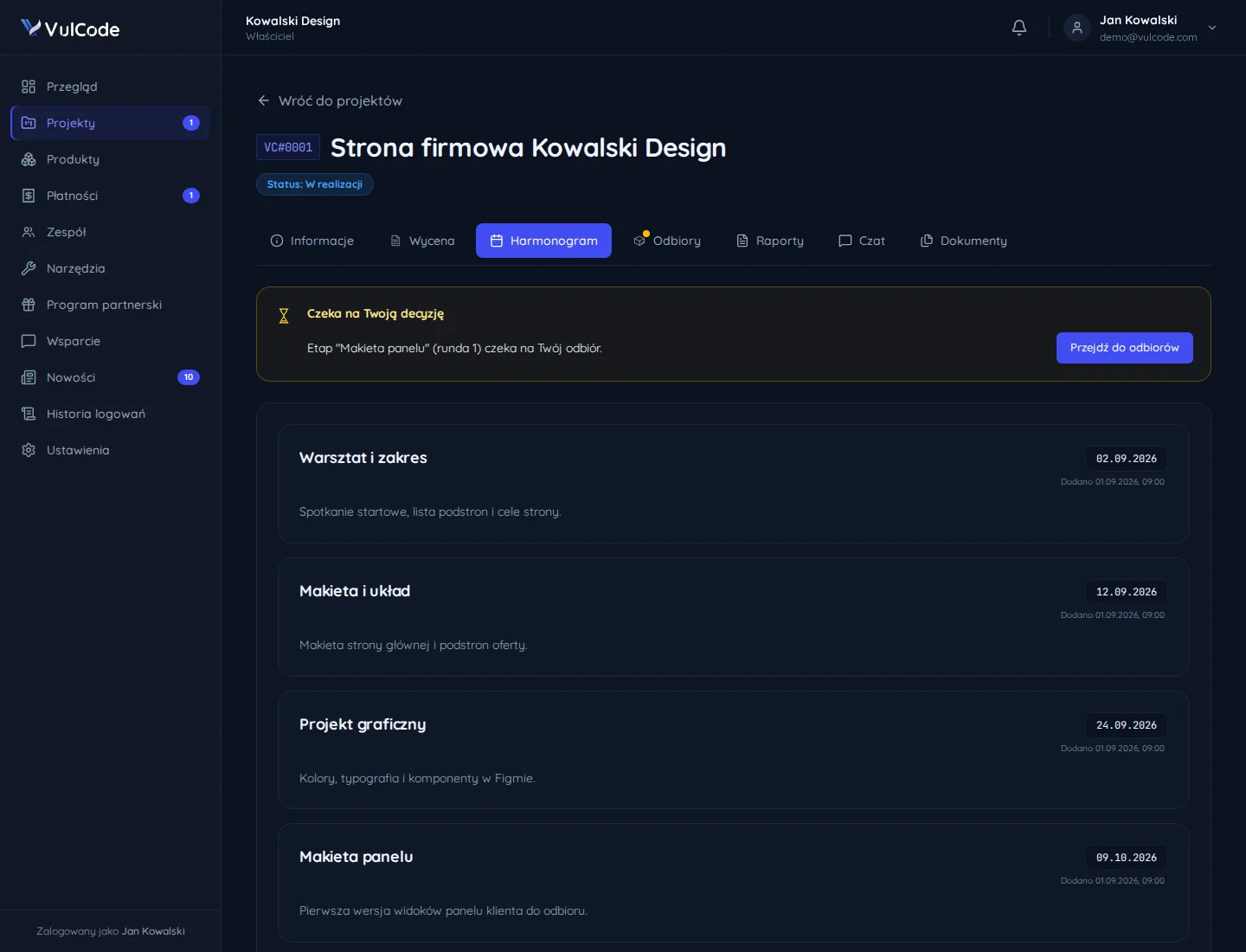
All materials, deadlines and upcoming milestones live in one place, not in scattered threads. You can see when things happen and reach your files without digging through an inbox.
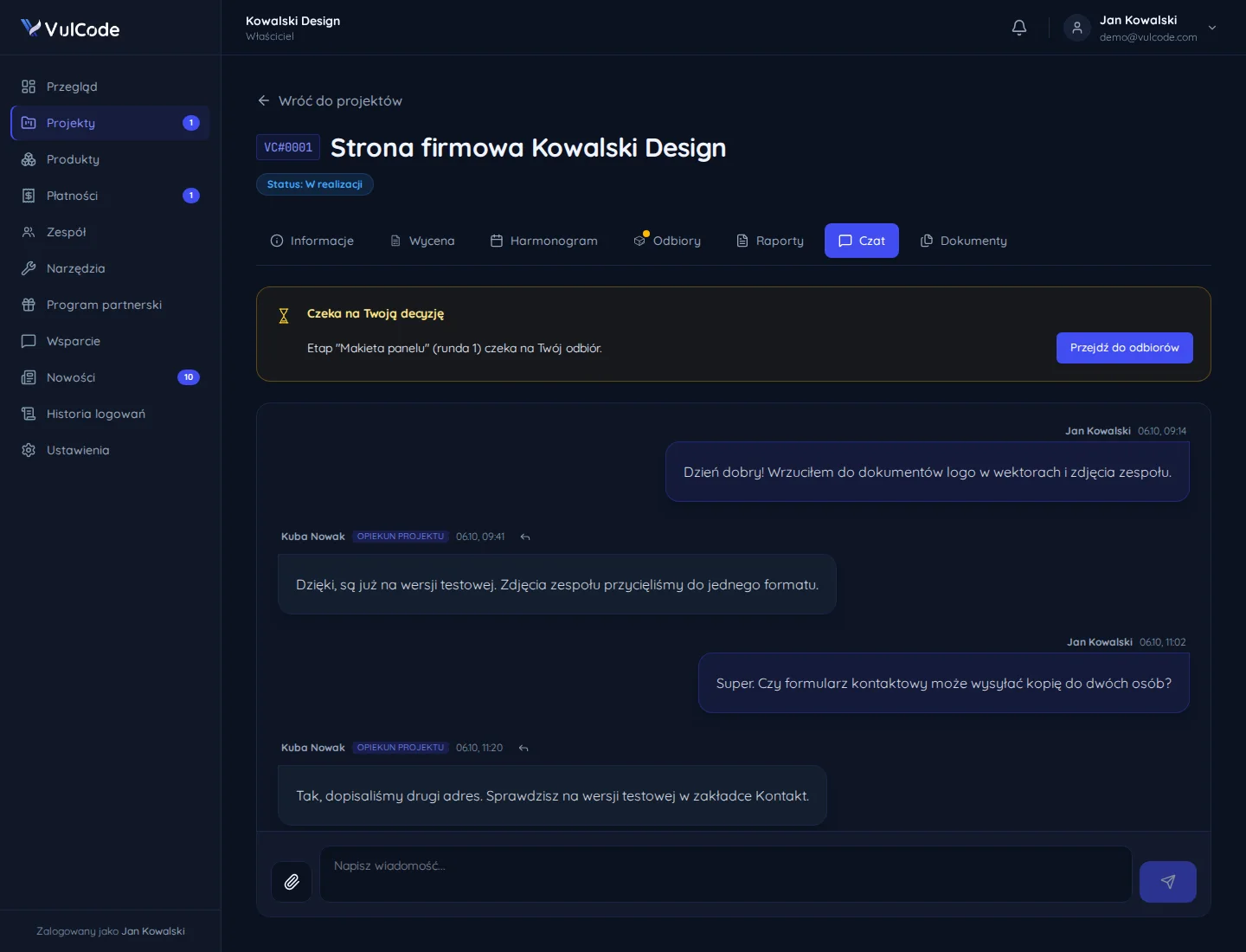
You raise questions and notes right in the panel, with the full history of the conversation and notifications when something changes. You talk to the people actually building your project, not a generic inbox.
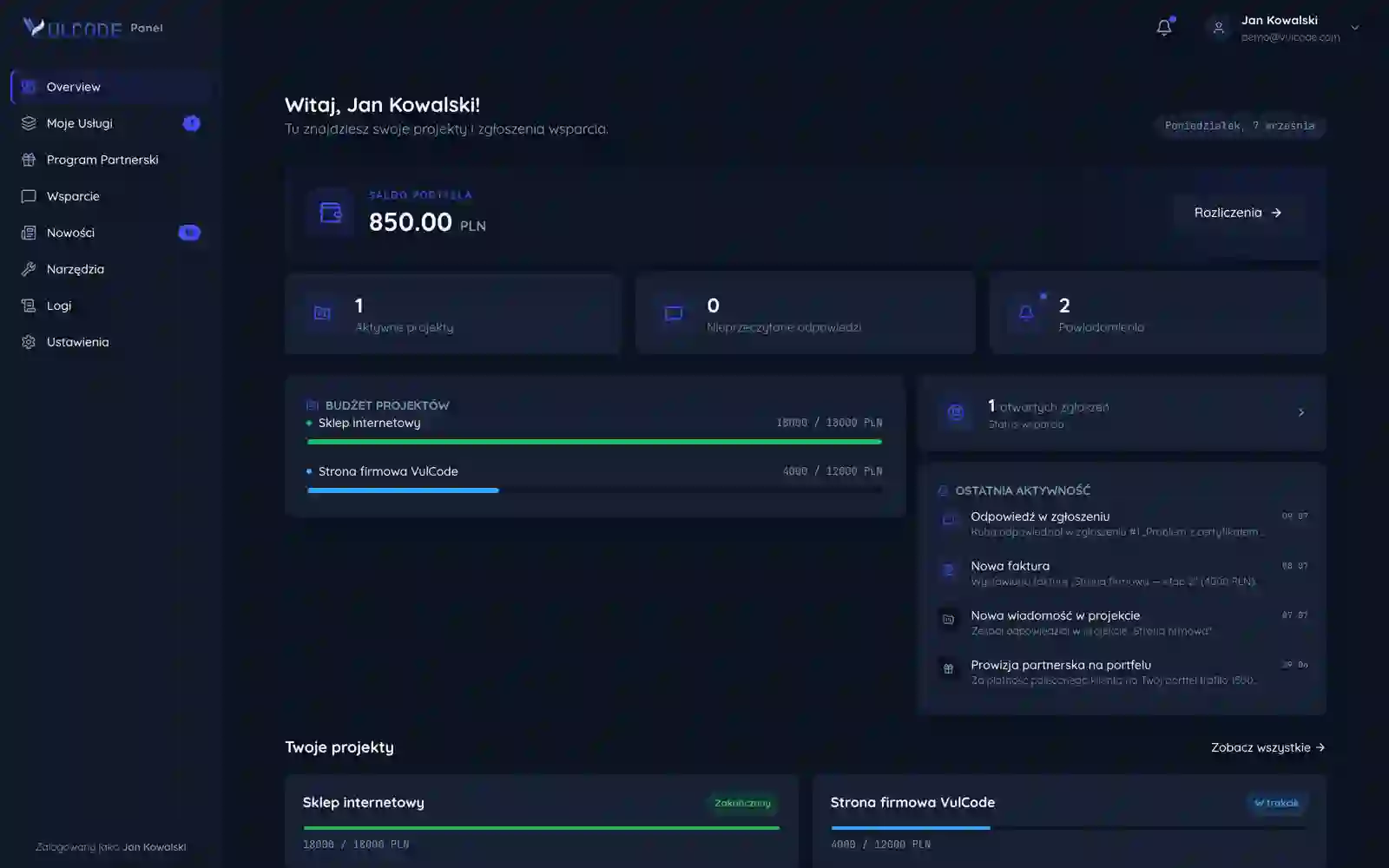
Invoices, payments and project details sit side by side, with no jumping between tools. Everything is visible to both sides from day one, on real data, not a mockup.
Prototyping the interface
Before any code runs, you see the layout and flow as wireframes of the key screens - a website, a panel, a store or a mobile app. We talk about where a button sits and in what order sections are read, not about colours - those come later. This is the cheapest moment to change your mind: moving a whole section or reworking navigation costs hours here, not weeks of rewriting finished code. So by the time we start building, it is clear exactly what goes where, and you are not seeing the result only at the end, when it is already too late to change it.


Building the software
Work happens on a staging environment you can reach from day one, in a shared repository. The product grows in phases before your eyes: from the skeleton, through placeholders, to real content and full functionality - on desktop and phone in parallel. Every week you get a short summary, so you never have to ask where things stand.
Testing and a free buffer for fixes
Before launch the product goes through a checklist we built over years of not wanting to make the same mistake twice. After launch there is a free time buffer for small fixes: we do not invoice for every typo.
Deployment and code handover
We set the launch date together so it surprises neither your users nor your team. After launch you get everything the project consists of: the repository, documentation and access. The code is yours - it is not held hostage by our company, and you do not have to come back to us to change anything.
Post-launch support and monitoring
Launch does not end the collaboration. We monitor uptime and response times, and when something breaks we usually know before you do. Tickets stay in the same panel we ran the project in, so nobody starts the conversation from scratch.
To the best of our ability we guarantee 99% uptime and active monitoring for the first 90 days after launch. We respond to a ticket within a day, and asking about anything costs nothing.
"To the best of our ability" - the real SLA is set individually in the contract, matched to the project.
Questions about how we work
Let's take the first step
Describe your project in a few sentences: what should be built, for whom and what happens if you do not build it. A quote and initial scope come back within an hour.