InPost
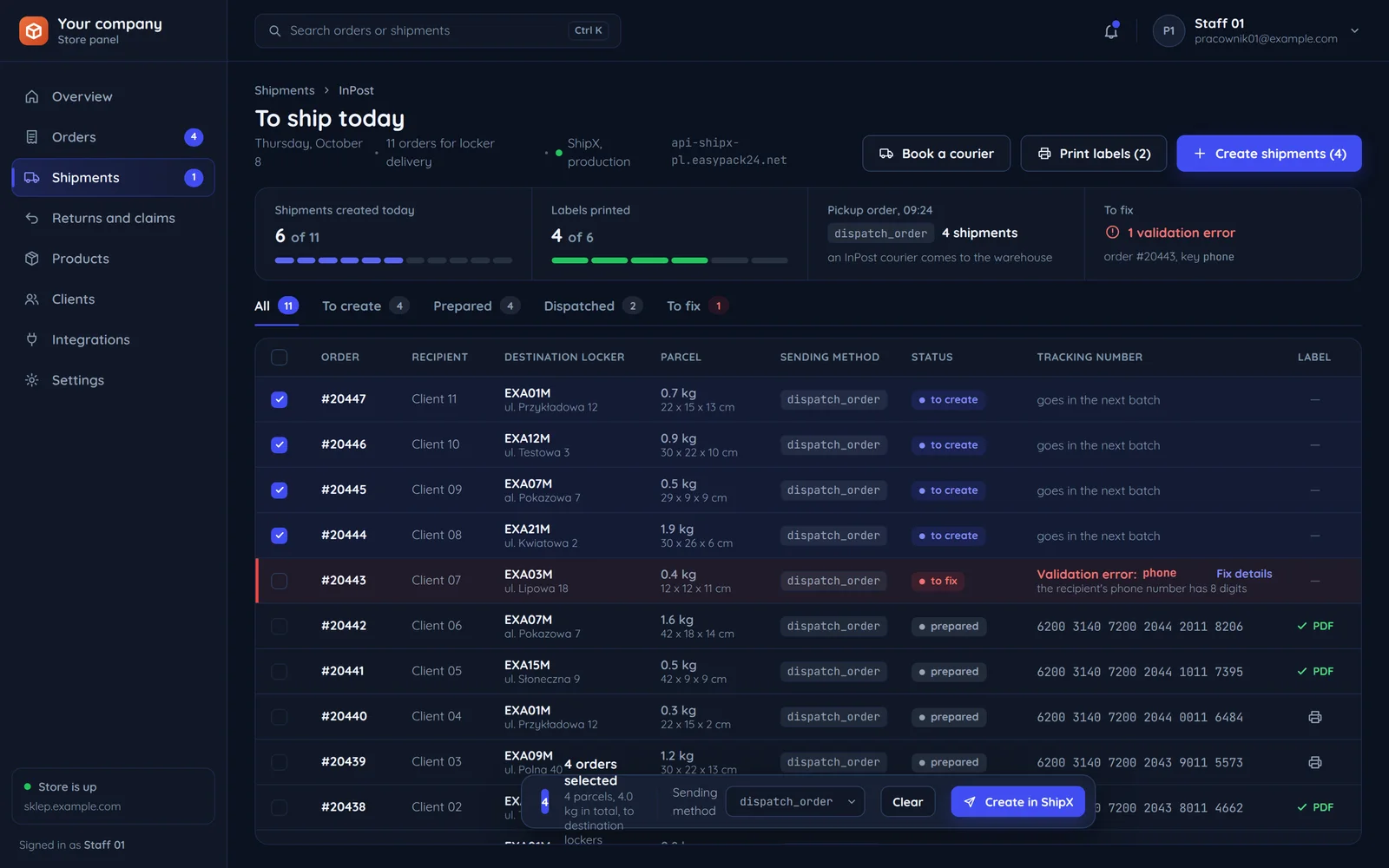
ShipX, Geowidget, status webhooksLocker shipments created in ShipX in batches, with labels, a pickup order and a validation error to fix.
The customer picks a pickup point at checkout, the warehouse prints a label in one click, and the parcel status flows back to the order by itself. Directly to the carrier or through an aggregator, depending on your volume and couriers.
Each has its own page with its API, sample code and pitfalls.
Locker shipments created in ShipX in batches, with labels, a pickup order and a validation error to fix.
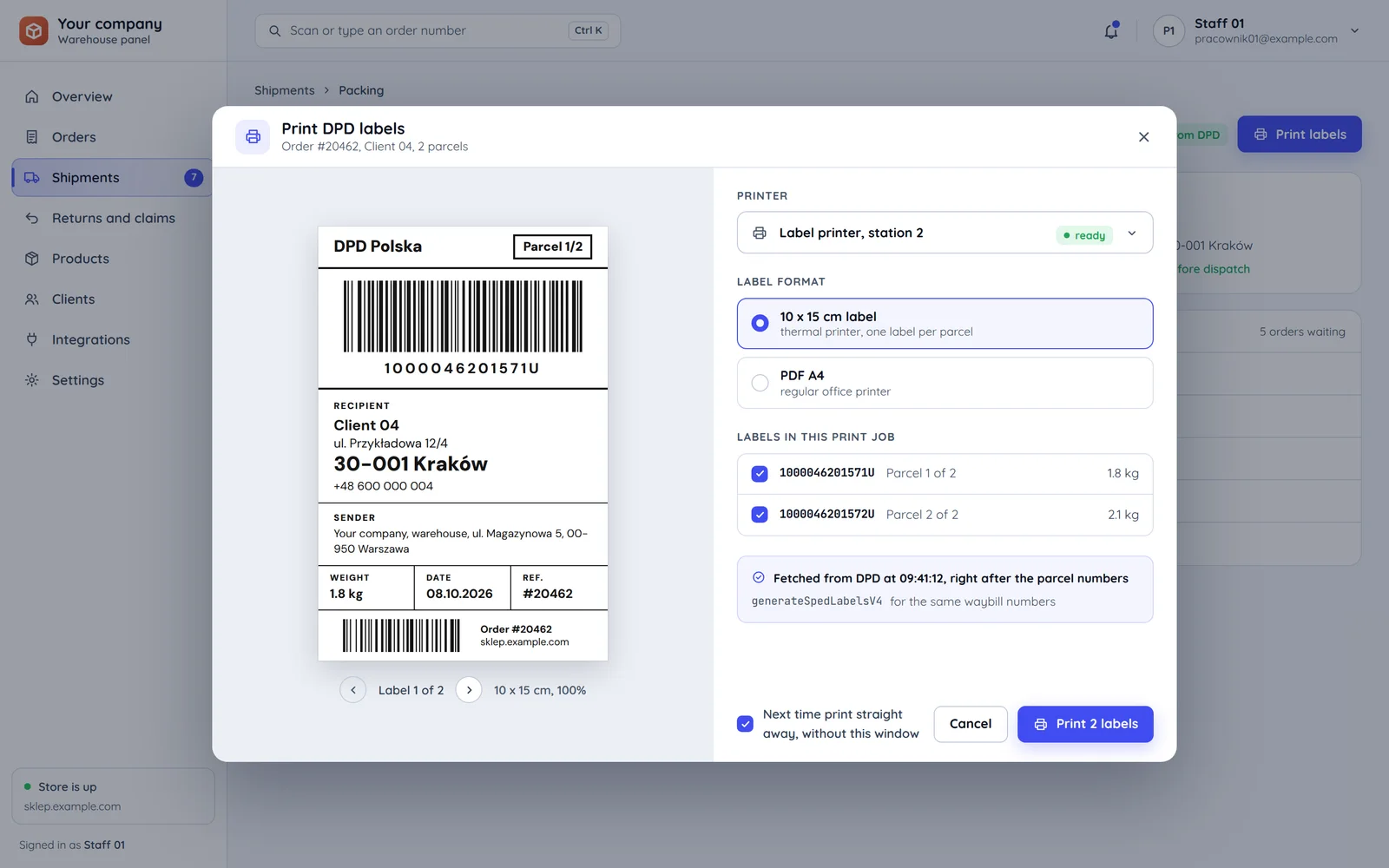
A 10 x 15 cm label for a thermal printer, one per parcel, fetched right after the parcel numbers.
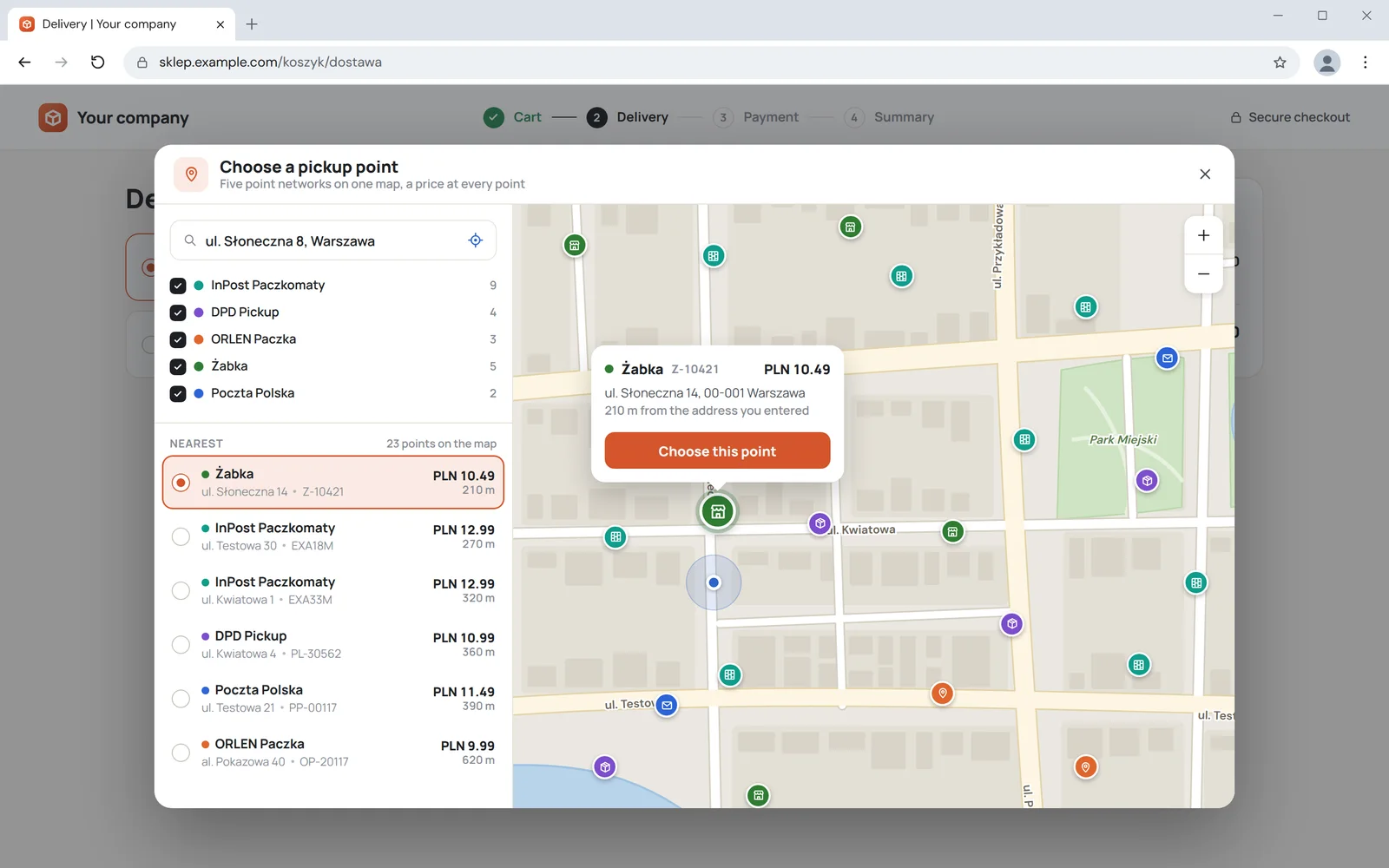
Pickup points of several networks on one map at checkout, with a price at each point.
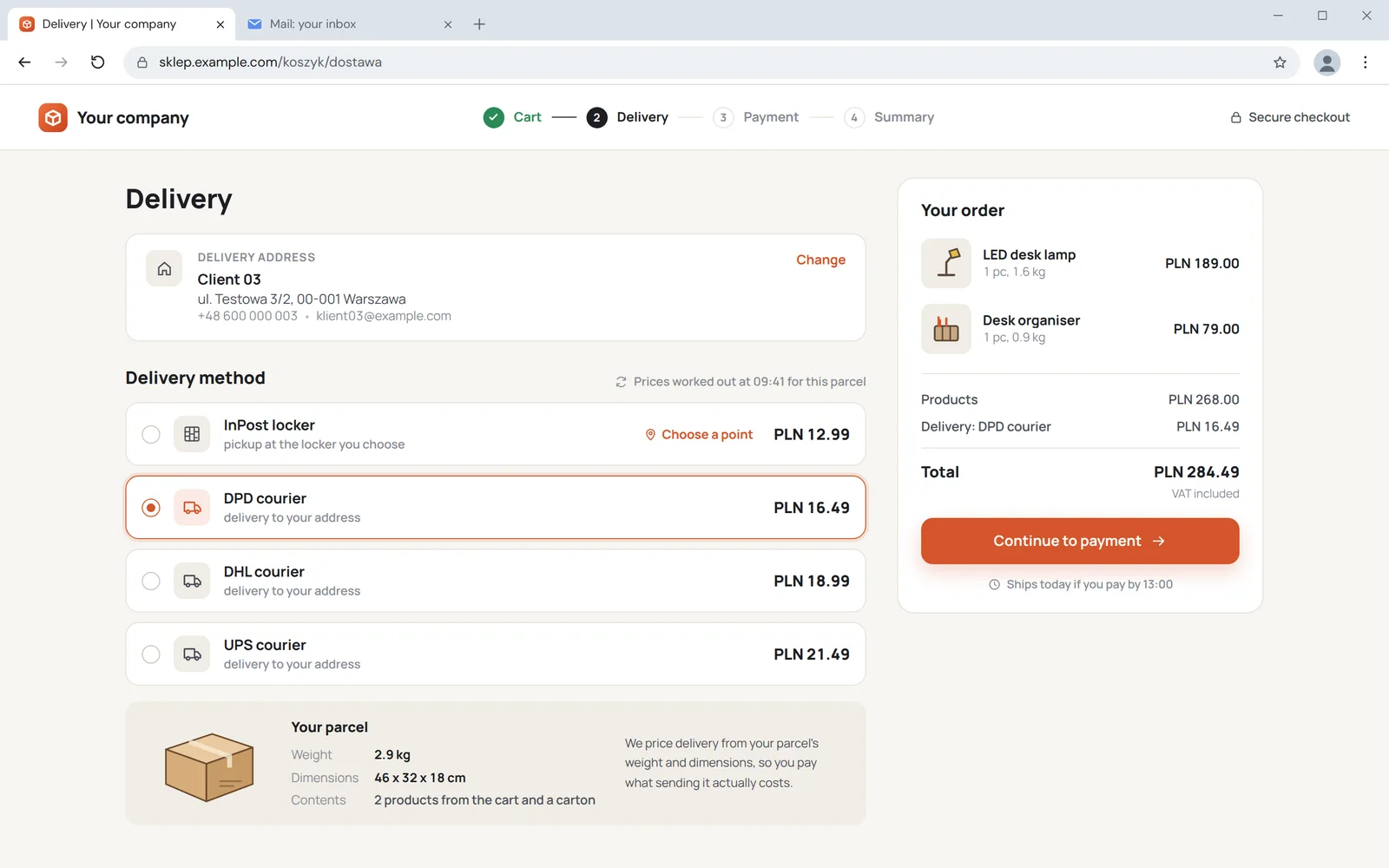
Courier prices at checkout worked out for the weight and size of this order's parcel.
Each talks differently. That decides rollout time more than the feature count. "Per arrangement" marks a detail we have not confirmed in public documentation. We check it for your agreement before quoting.
| From the integration side | InPost ShipXcarrier, its own API | DPD Polandcarrier, its own API | Furgonetkaaggregator | Apaczkaaggregator |
|---|---|---|---|---|
| API style | REST | SOAP with versioned operations | REST | REST with signed requests |
| Authentication | organisation token, OAuth 2.0 | login, password and customer number | OAuth2 | HMAC-SHA256 with the App Secret |
| Test environment | a separate sandbox account | a demo service | per arrangement | per arrangement |
| Point map for checkout | Geowidget | per DPD arrangement | a multi-carrier map | points via API |
| Shipment statuses | webhooks | per DPD arrangement | via API | a tracking endpoint |
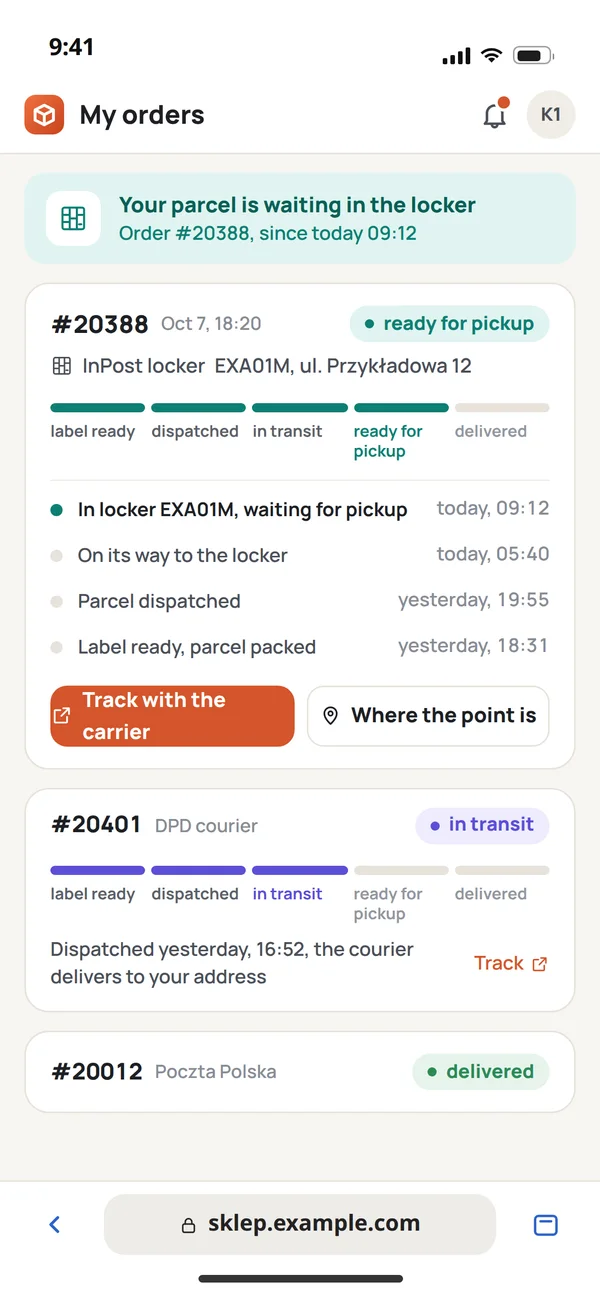
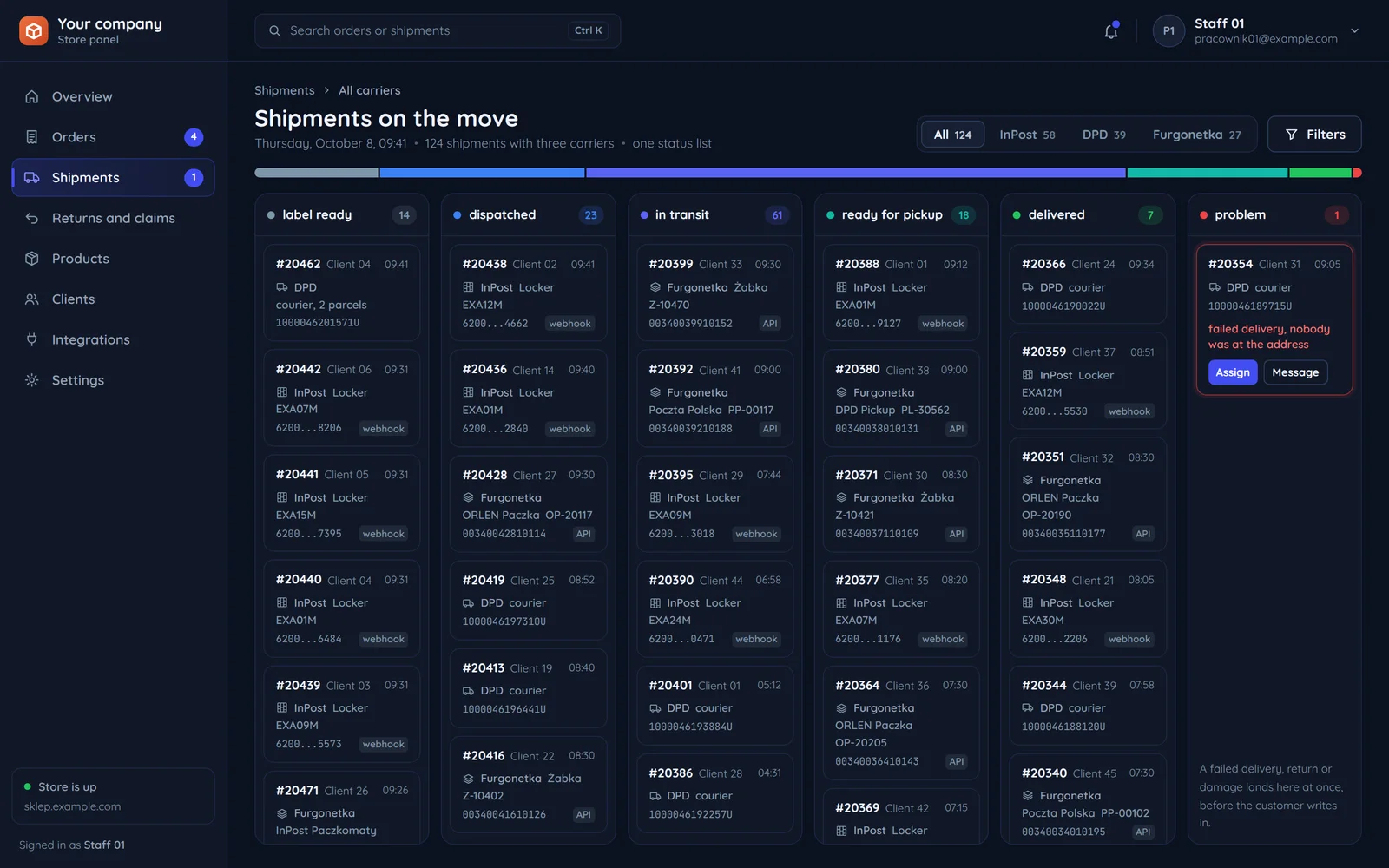
Every carrier names statuses its own way. In your system we fold them into one list that customers and support understand.
The customer and support see the same five statuses whichever carrier has the parcel.
The integration records every change on the order and in the store's messages, so nobody retypes it from the carrier's panel.
Once the parcel is in transit, the customer gets the carrier's tracking link. Support sees a failed delivery, a return or damage in the panel at once.
The most common shipping question. The answer depends on parcel volume and couriers.
You want to offer customers several couriers.
You ship a moderate number of parcels.
You prefer one integration and one bill.
What the aggregator passes on is enough.
One API for many carriers, with a point map and labels.
One carrier at checkout is enough.
One carrier handles most parcels.
You have your own agreement with it.
You need features the aggregator does not pass through.
An integration with the carrier's API, e.g. InPost ShipX or the DPD service.
Shipping, labels and parcel statuses
Where the orders to ship come from.
Tell us which couriers you use and how many parcels you ship a day. We will reply within an hour with a proposal and a quote.