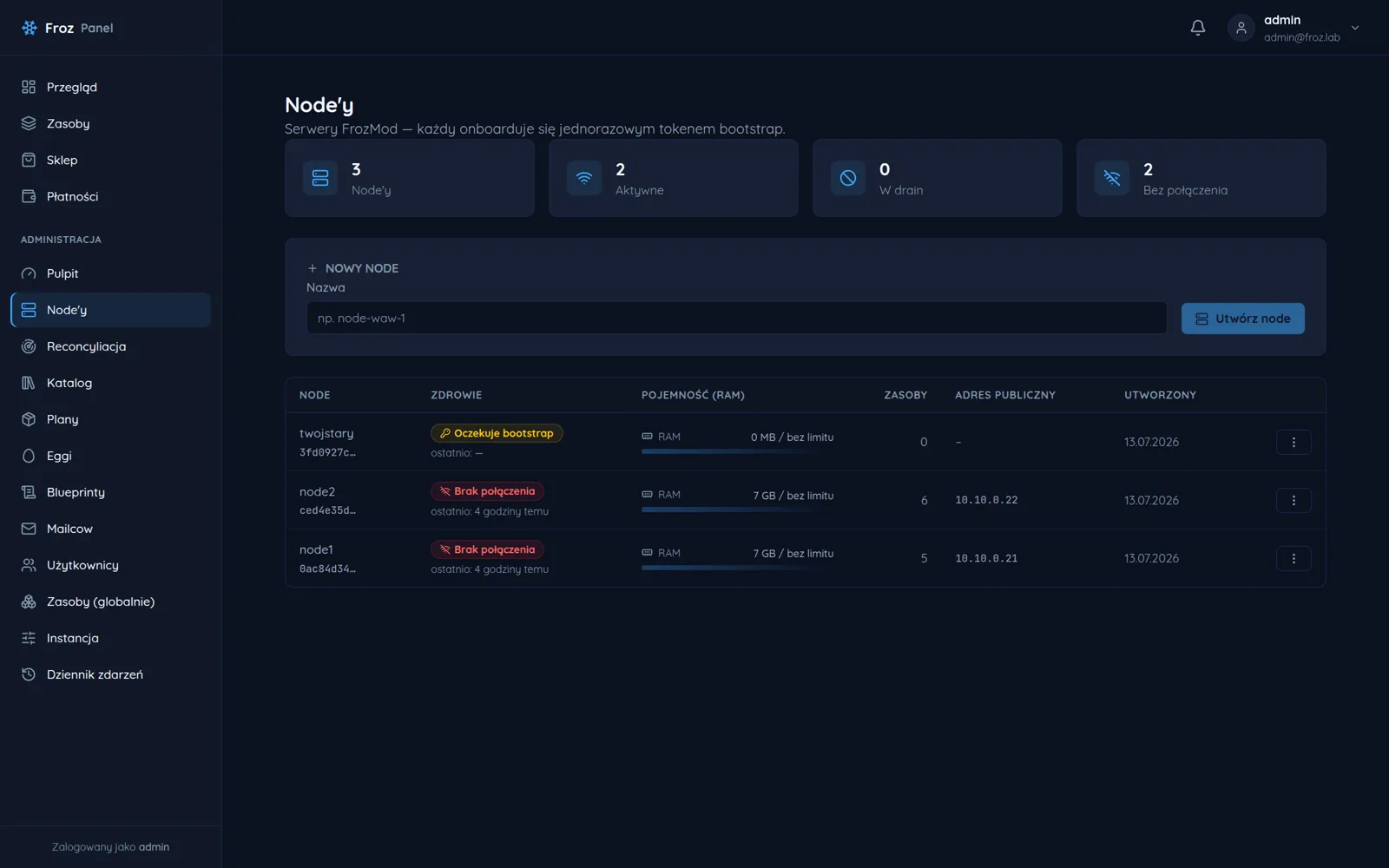
The operator's nodes
Nodes in the operator panelThe servers the panel runs customers' services on, with their health, memory and number of resources.
The first version works and has paying customers. Now you need organisations and roles, subscriptions with invoices, an API for customers and control over server costs. We run our own SaaS products, so we know these problems from the inside.
The most common rebuild after an MVP: the product started with single accounts, but customers buy for teams.
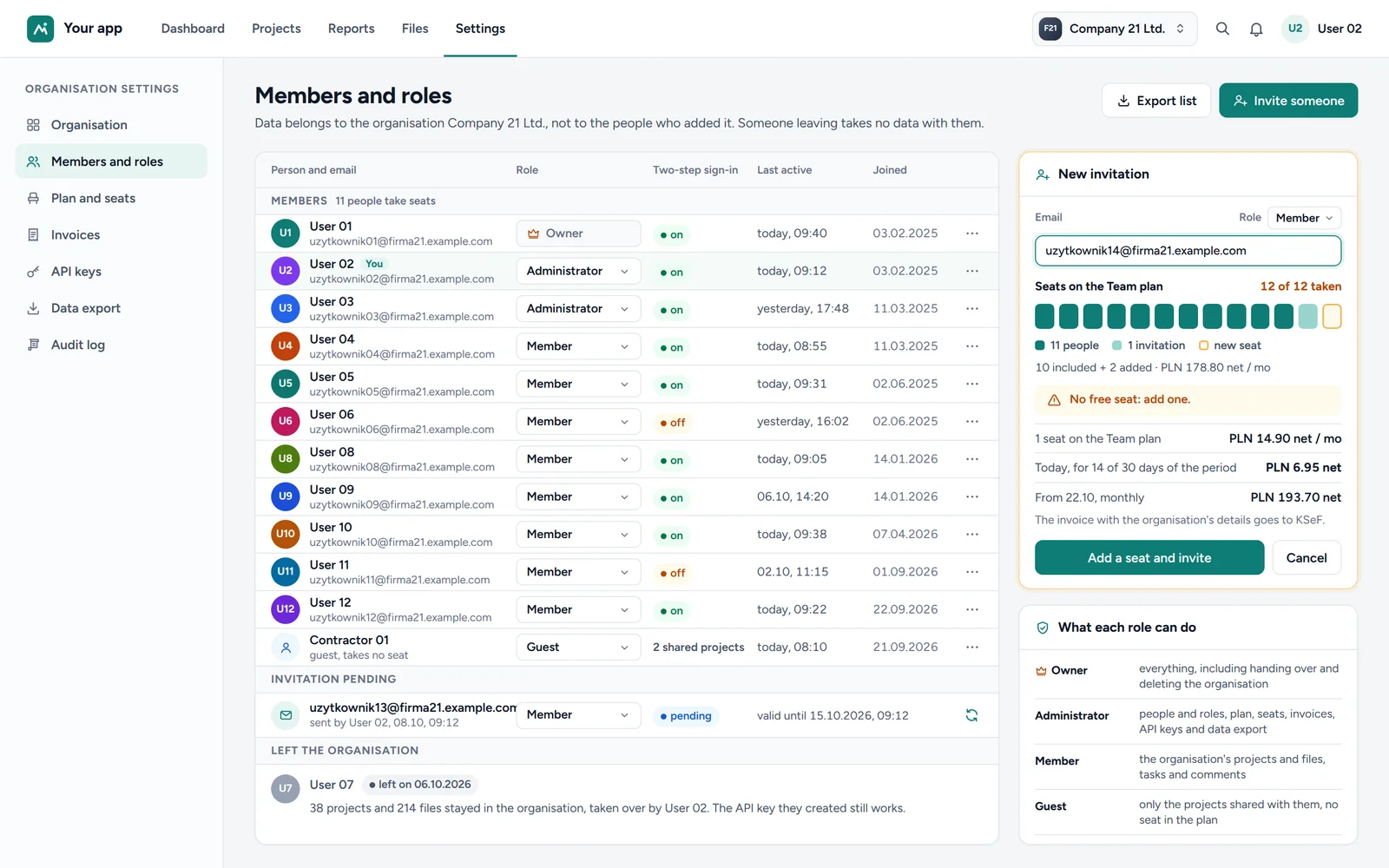
Seats in the plan. Seats in the subscription and buying more from the panel, with prorated billing.
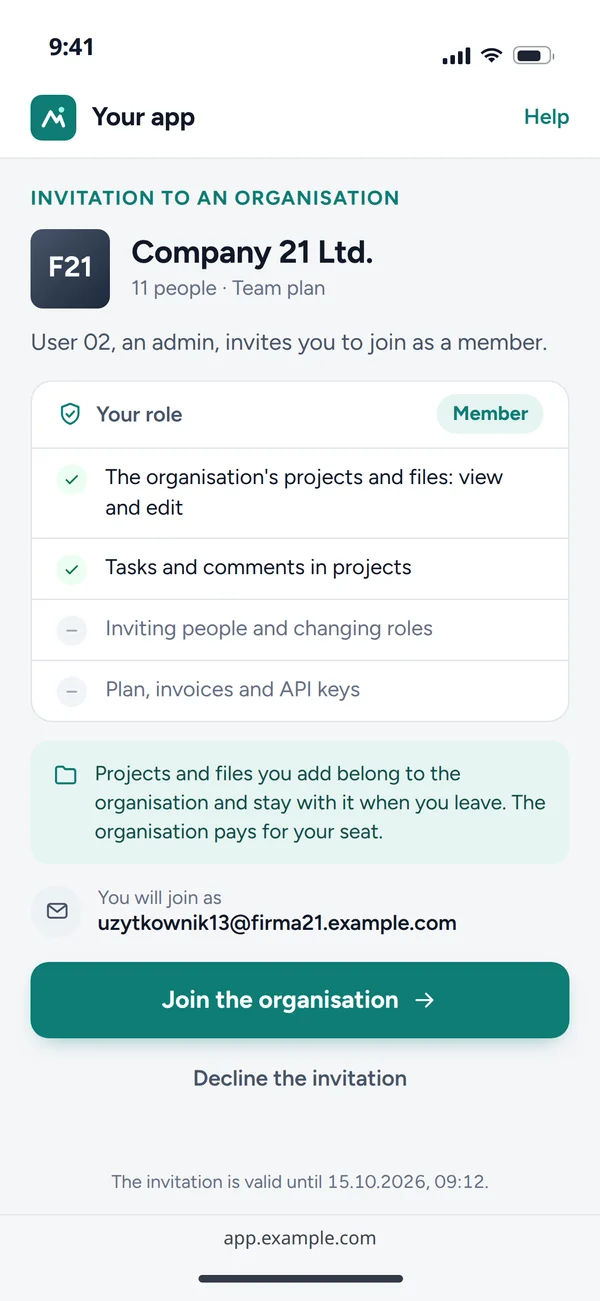
Owner, admin, member and guest with clearly described permissions, checked on the server.
Data belongs to the organisation, not the person who created it. An employee leaving does not take the customer's data with them.
38 projects and 214 files stayed in the organisation, taken over by User 02. The API key they created still works.
Development as a service. We run changes like these as platform development, and quote new modules separately.
Subscriptions, invoices and failed payments have to handle themselves before you have a few hundred customers.
Plan, seats and billing period through Stripe.
A company invoice with the organisation's details.
Invoices for Polish companies sent to KSeF. A paid period goes back to the subscription.
Payment failed: more payment attempts and emails asking for a new card.
Overdue: read-only mode instead of deleting data.
SaaS customers want to connect your product to their systems. We describe the API in OpenAPI from the first endpoint.
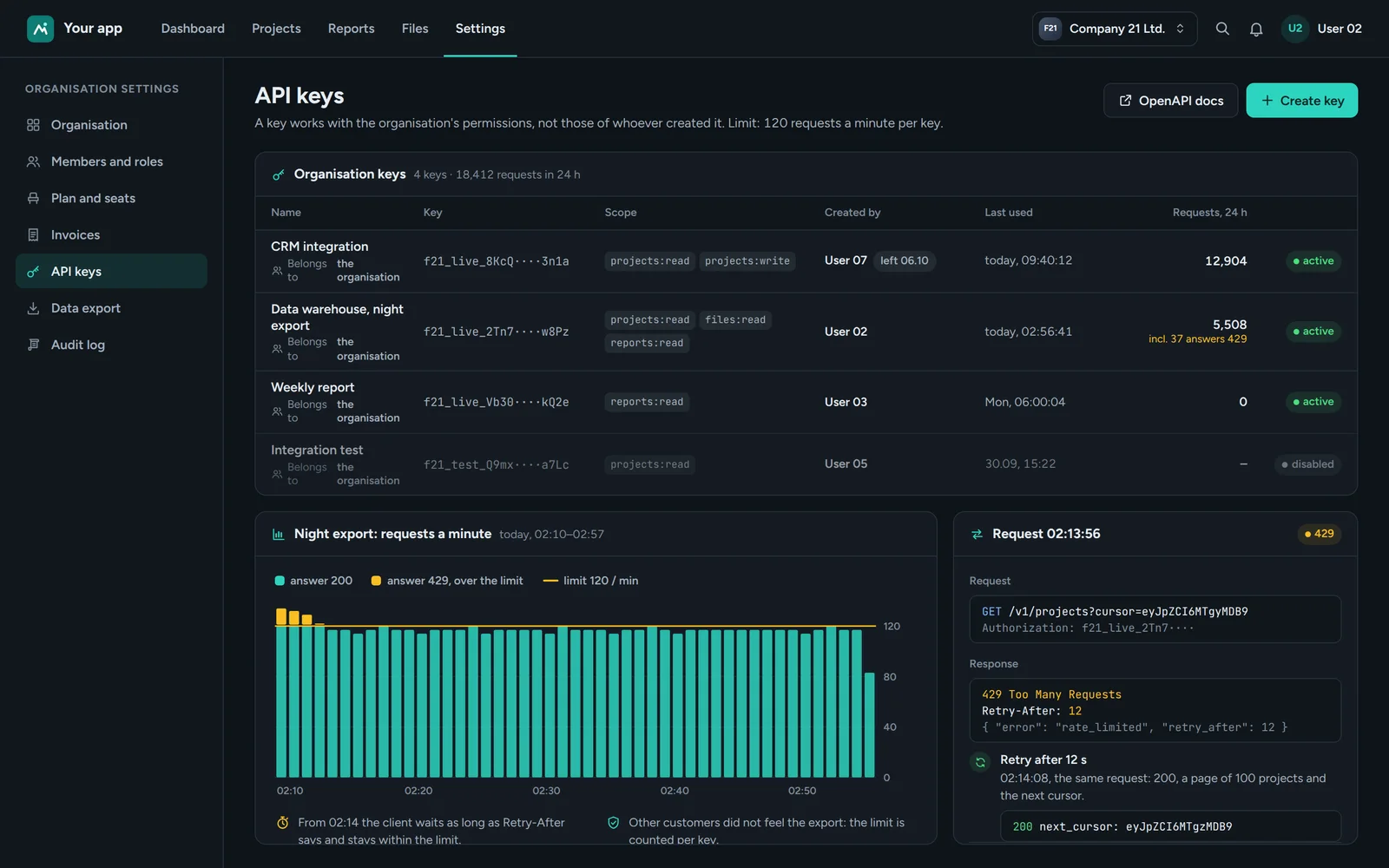
An API key is generated in the panel and carries the organisation's permissions, not those of whoever created it.
Lists do not lose records when data is added during a fetch.
Too many requests end with a 429 and a retry time, not a slowdown for every customer.
A panel for hosting companies with provisioning, a store, a wallet and billing. We solve the problems described here on our own product first.
The servers the panel runs customers' services on, with their health, memory and number of resources.
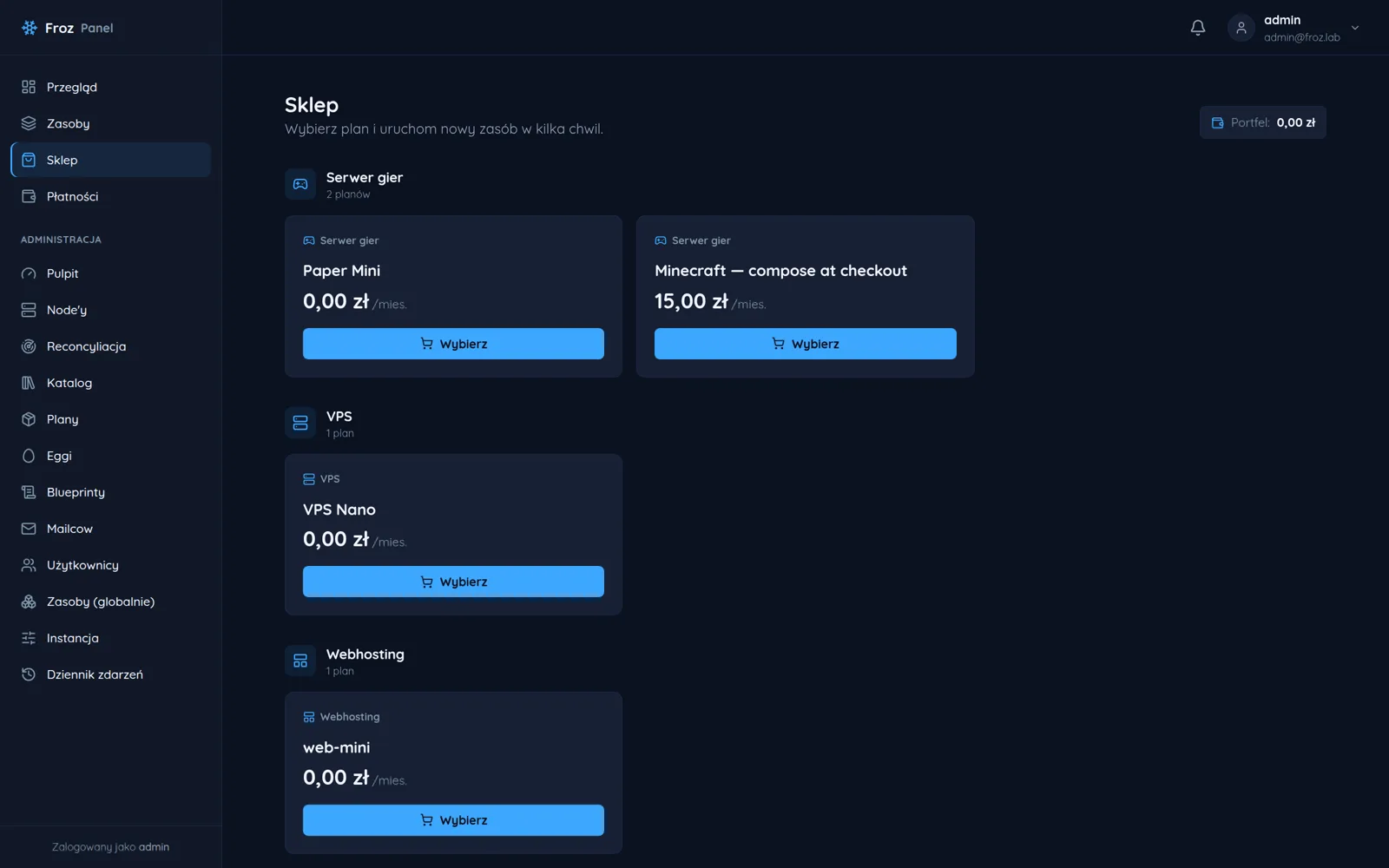
Purchase, provisioning, payments, limits and renewals in one product.
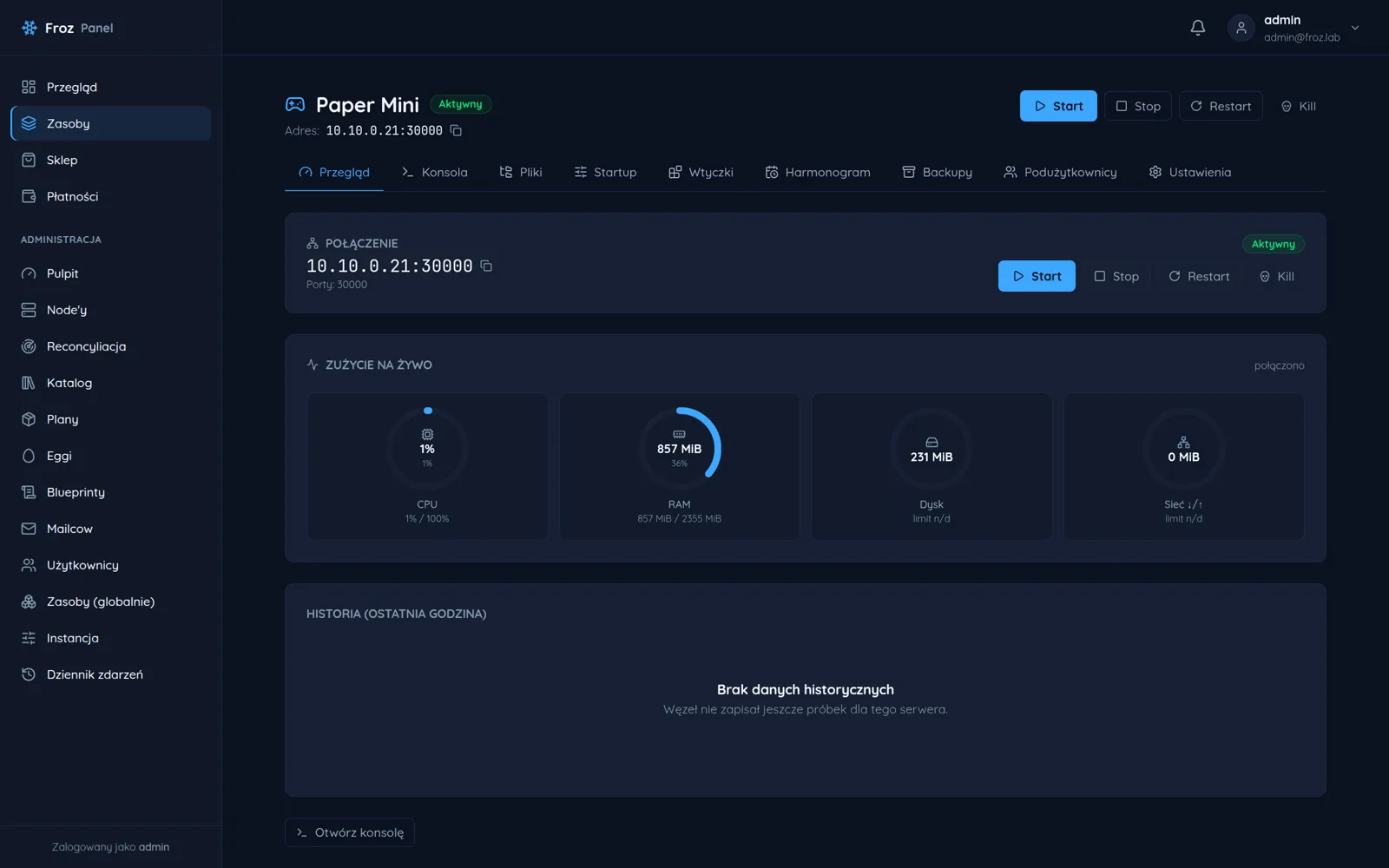
Live resource usage for the customer and the operator.
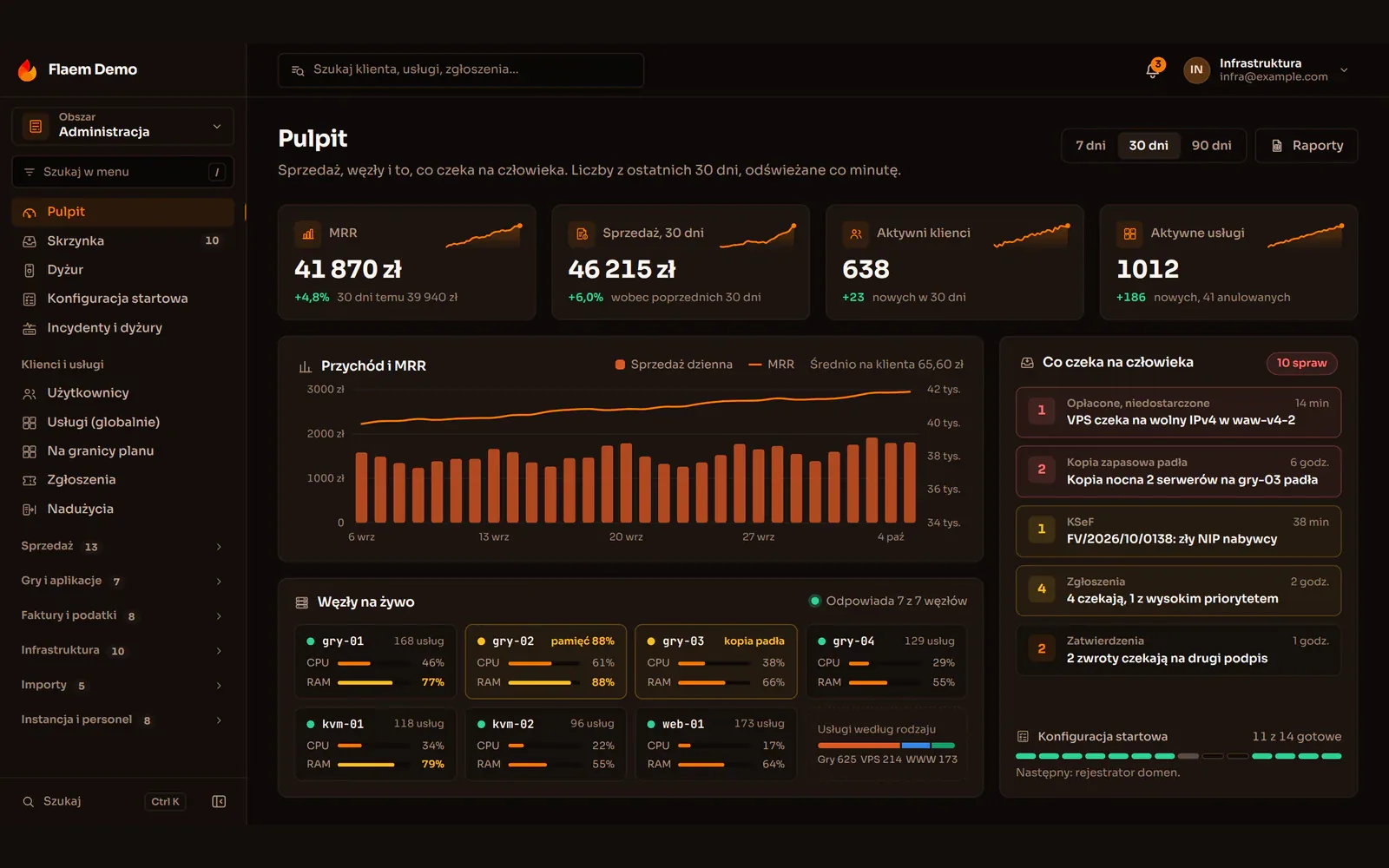
The panel runs under the brand and domain of the hosting company using it. The same product in the browser, on the desktop and on the phone.
What we check in a growing SaaS. Each one usually shows up with the first large customer. More on our blog: Business hosting: VPS or cloud, After launch: monitoring and maintenance.
We look for queries that were fine at a hundred rows and slow at a million, and add indexes or change the data model.
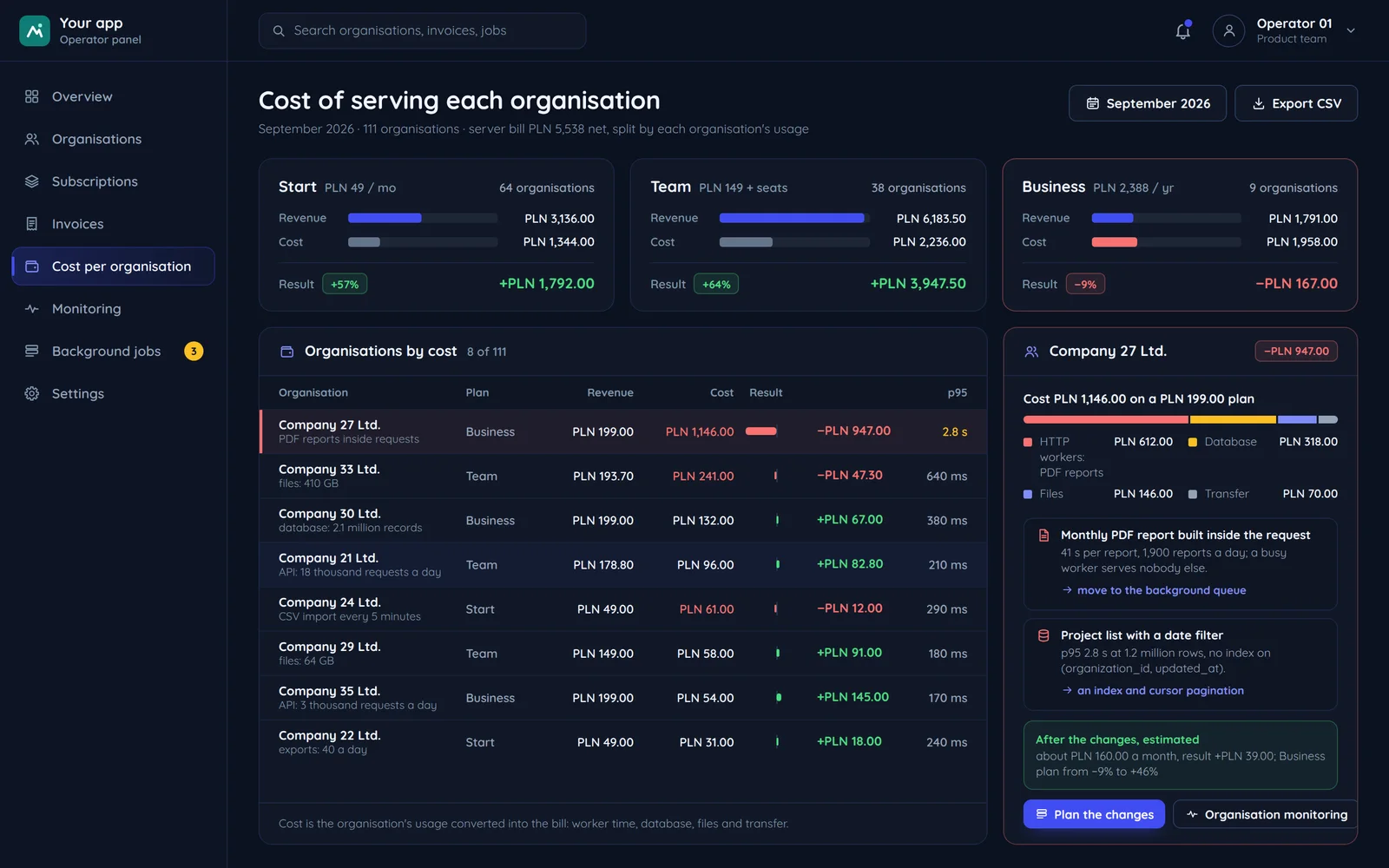
We work out what one customer costs to serve, so pricing does not grow slower than the server bill. Options are compared in our article on business hosting.
Exports, emails and reports move to a queue so they do not block user requests.
Response times and errors per organisation, to know which customer is hurting. Part of our DevOps work.
The most common questions from teams growing a product after the MVP.
Before the MVP, billing and servers.
Tell us what is blocking development or sales today. We will reply with a plan for the first changes and a free quote.