
Billing models: fixed price, hours or a subscription
A fixed price for a set scope, time and materials when the scope changes, or a subscription for ongoing development and maintenance. We match the model to the project and write the rules into the order before any work starts.
Three models side by side
Each has its place. Most often we work on a fixed price.
Time and materials
- The amount known before the startpartly
- The scope can change without amendmentsyes
- A report of the work doneyes
- Good for a new project from scratchpartly
- Good for ongoing developmentyes
Before the start you know the rate in the order, and the final total follows the time we actually work. Every hour belongs to a specific task, and every week we send a summary in the project channel. You can change direction and the order of the plan without an amendment.
Fixed price
- The amount known before the startyes
- The scope can change without amendmentsno
- A report of the work donepartly
- Good for a new project from scratchyes
- Good for ongoing developmentno
We write down the features and give one amount for them, which goes into the order together with the date. It changes only with a change of scope both sides agree to in writing. We hold that scope to the end, and you check the finished work on the test version before you accept it.
Subscription
- The amount known before the startyes
- The scope can change without amendmentspartly
- A report of the work doneyes
- Good for a new project from scratchno
- Good for ongoing developmentyes
We set the monthly fee and the scope it covers before the subscription starts and quote it individually for the project. Within that scope we handle updates, backups and small changes. What was done and how long it took you see in a regular summary of the work.
Which model for which project
It comes down to how well you know the scope at the start. When the scope can be written down before the start, a fixed price fits, and when it only becomes clear along the way, time and materials does.
- Fixed priceA company website with a blog and a formThe whole scope can be described before the start. You know the amount and the date from the quote, so this model fits when the budget must be known upfront.
- Time and materialsAn app developed from early user feedbackThe next features depend on what tests show. On a fixed price every new feature would mean a separate quote.
- SubscriptionA store that needs updates and small changes every monthSteady care instead of a quote for every change. Instead of building from scratch you can also start with a ready-made platform for a monthly fee.
- A mixA product's first version, then growthThe first stage on a fixed price, then time or a subscription. Every change of model between stages goes into the order with both sides' consent, and we quote maintenance and development after launch individually.
How you pay in each model
We write the payment schedule into the order before any work starts. The three models on one scale, over a three-month example.
Fixed price
A company website with a blog and a formMost often three equal parts, and any other split goes into the order. When the order sets none, our terms assume half before the start and half after acceptance (cl. 5.2).
Time and materials
An app developed from early user feedbackYou pay for the time in the weekly reports at the rate in the order. We write the payment dates into the order before work starts.
Subscription
A store that needs updates and small changes every monthThe same fee every month for the agreed scope of care or development, quoted individually for the project.
Week
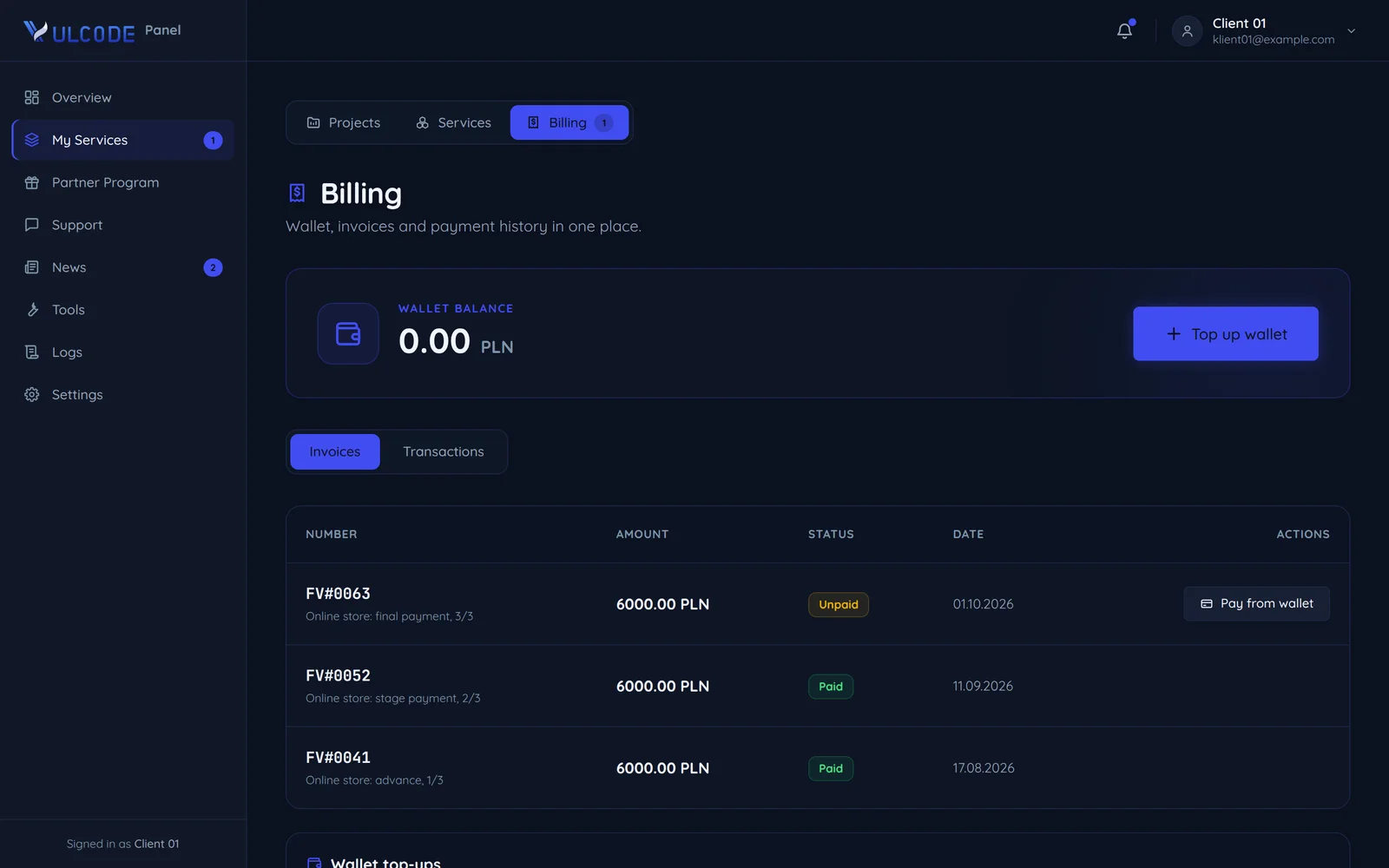
Each part has its own invoice with the part number, and the status shows what is already paid.
A scope change during the project
With a fixed price every change goes the same way, because it can move the amount and the date written in the order. On time and materials a change goes into the next week's plan without a separate quote.
You describe what you want to add or change, in the project channel or the panel.
We say what the change means for the price and date.
Both sides confirm the change in writing, including electronically. Only then does it join the scope.
The change goes into the plan and onto the test version.
Any changes to the scope of an Order require the written consent of both parties and may result in an adjustment of the remuneration and delivery timeline.
- YouChange request
You describe what you want to add or change, in the project channel or the panel.
- VulCodeChange quote
We say what the change means for the price and date.
Not agreed or deferredFor laterBoth sidesThe change waits for a later stage or a subscription, and the current scope stays as is. The amount and the date in the order do not move either. - Both sidesWritten consent
Both sides confirm the change in writing, including electronically. Only then does it join the scope.
Terms, clause 3.3Scope changesAny changes to the scope of an Order require the written consent of both parties and may result in an adjustment of the remuneration and delivery timeline.
- VulCodeIn progress
The change goes into the plan and onto the test version.
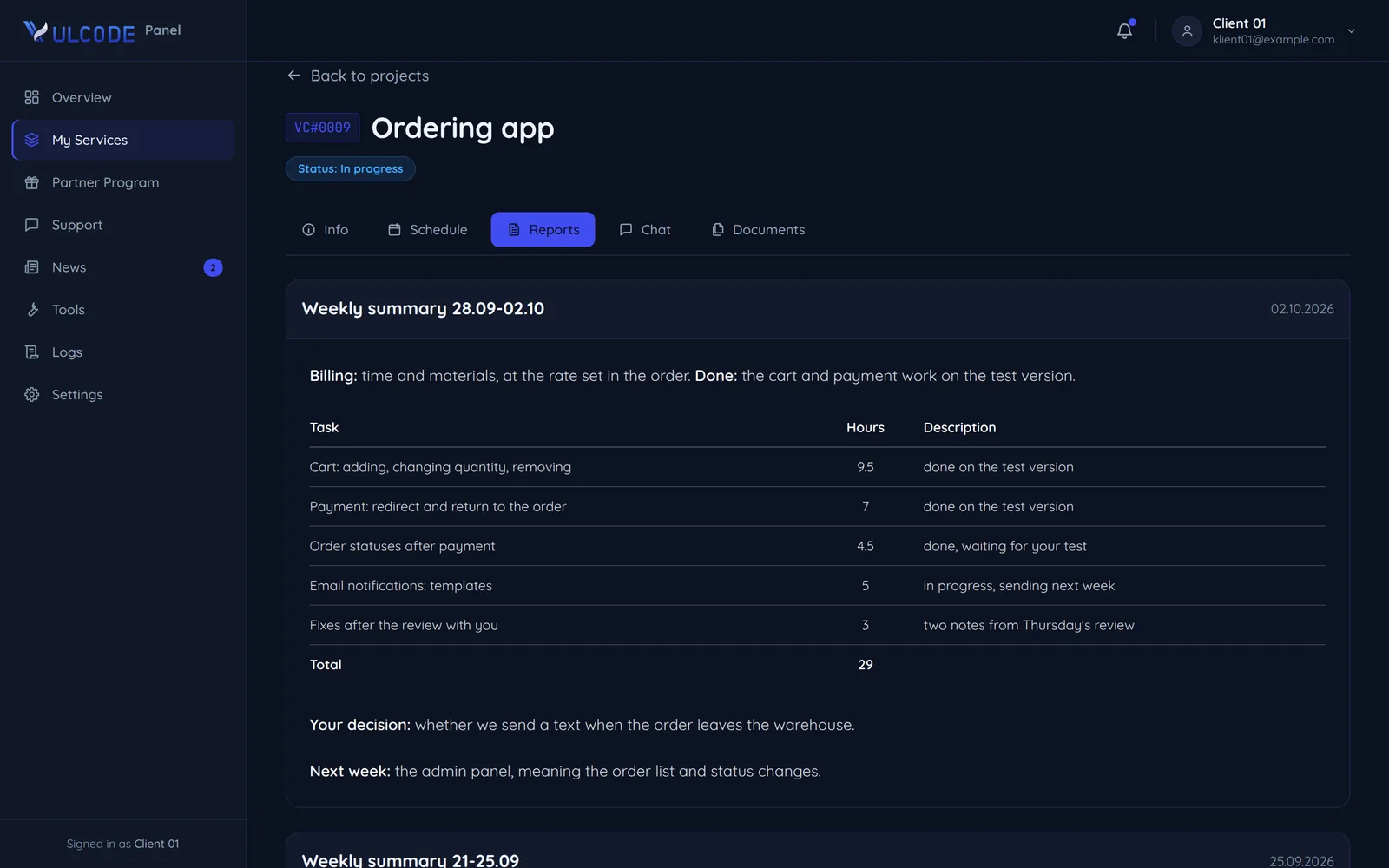
The report on time and materials
On time and materials every amount has a list of tasks behind it. This is the summary from the screen at the top of the page, up close.
- TasksEvery task has its own row, and what is done you can check yourself on the test version.
- HoursTime belongs to tasks, not to days, so you know what a specific feature cost.
- Your decisionQuestions that block the work are listed apart. Under them is the plan for next week, and you can change its order.
Common questions about billing
Answers based on our terms and on how we write the model into the order.

Read next
What to read alongside billing models.
Not sure which model to choose?
Describe the project and we will suggest the model that suits it and send a quote.