
kestrel
A relational database engine from scratch in Kotlin: a SQL parser, B-tree storage, an executor, WAL transactions and a CLI. It runs real SQL queries and is covered by a full test suite.
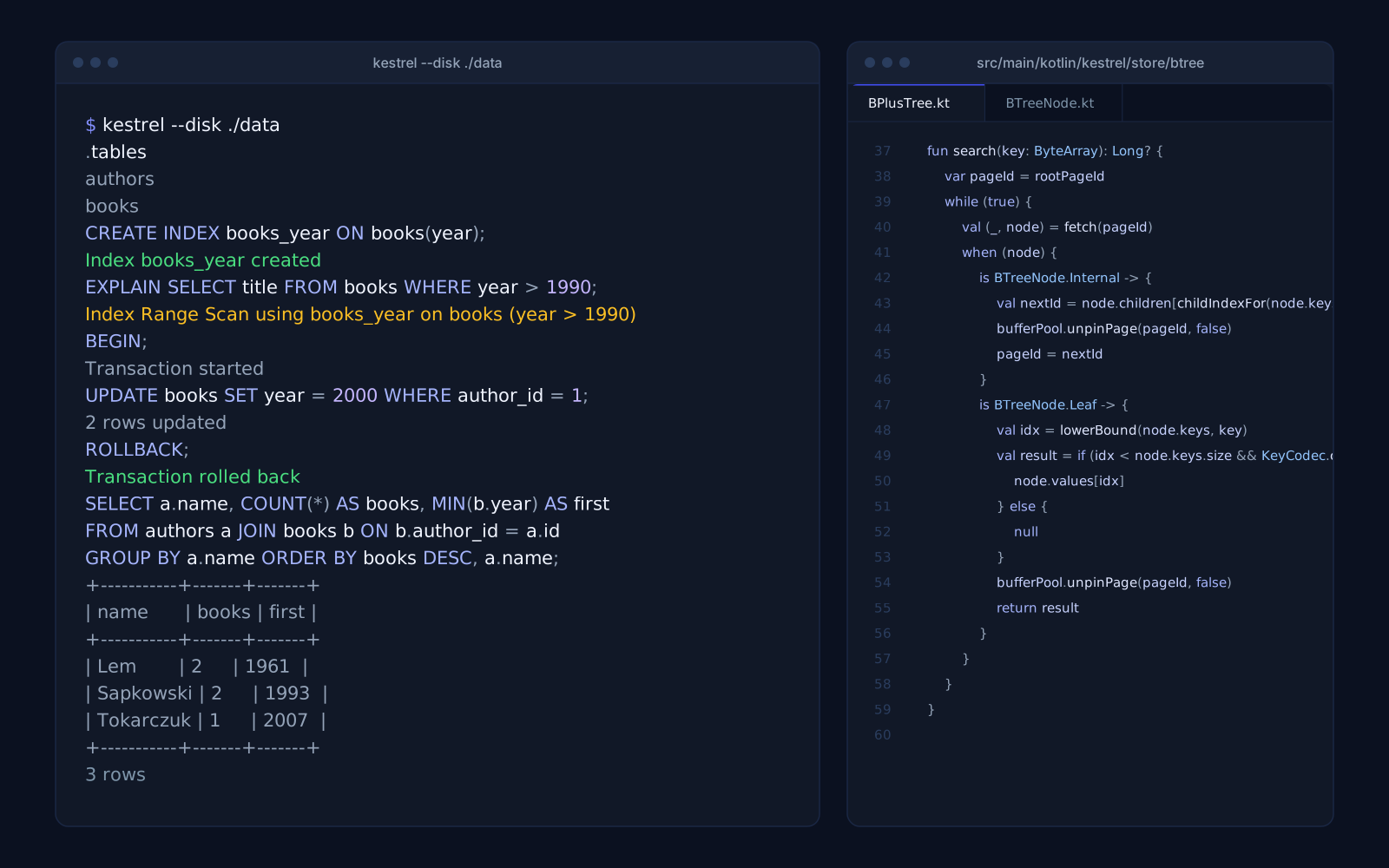
Overview
kestrel is a relational database engine written from scratch in Kotlin. It has everything that makes a database a database, not just a place to keep data: its own SQL parser, a query executor, B-tree storage, WAL-backed transactions, plus a CLI and a full test suite. It runs real SQL queries rather than pretending to handle them.
Day to day, a database is one line: run a query, get rows. Writing one from scratch strips that comfort away and shows how much happens underneath - and that journey downward is the whole point of this project.
Behind one innocent SELECT hides a chain of hard questions. How do you keep data on disk so you can find it fast? How do you turn SQL text into an execution plan that knows what to read and in what order? And the hardest: how do you not lose a write when the power vanishes halfway through?
Each of those questions is usually hidden behind the comfort of a ready-made database. Writing an engine from scratch pulls them out into the open one by one and makes you solve them for real, not wave them away. That is why a database engine shows so clearly whether you truly understand what happens underneath.
The full path of a query
kestrel takes an ordinary query and pushes it through the full path - from text all the way to bytes on disk. Each stage has one job and hands its result to the next, and you can trace the whole thing with a finger from a line of SQL to where the data lands.
SQL text turns into a query tree.
the tree becomes a plan: what to read and in what order.
data lives in a B-tree so lookups by key are fast.
every change goes to the log first, only then to its place.
The engine's layers
| Layer | Job |
|---|---|
| Parser | SQL into a query tree |
| Executor | tree into an execution plan |
| Storage | data in a B-tree for fast lookups |
| WAL | a log of intent before the actual write |
WAL, or why you do not lose data
The hardest part of a database is invisible until something goes wrong. The WAL is the mechanism that decides whether, after a sudden power-off, the database returns to a consistent state or leaves you with half a written transaction. The rule is simple and inviolable: write the intent to the log first, then the actual change - never the other way round.
The result: a working engine
kestrel runs real queries, passes a full test suite and has a CLI, so it is not a sketch but a working engine. We wrote every layer from scratch, from the parser to the WAL, and each can be traced from a line of SQL all the way to bytes on disk.
Questions about kestrel

More projects
More work from the same category - see how we tackle similar challenges.

Have a similar project?
Get in touch - a quote is free and comes back within an hour.