
Go: what we build with it and why
We pick Go for services that run on many machines and should never need attention: node agents, telemetry, messenger servers and networked games.
Go in real screenshots
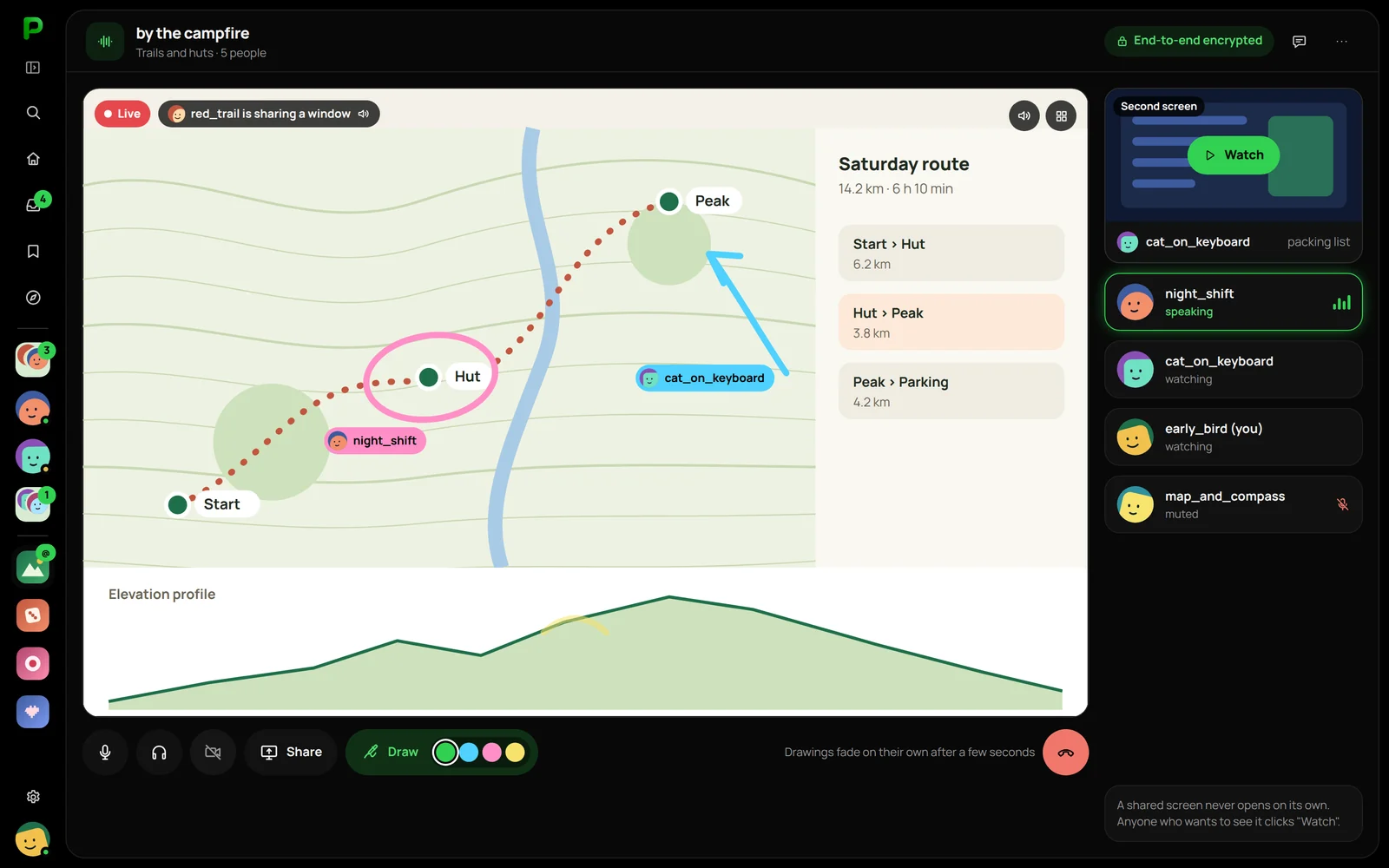
The projects on this page on the screens from the portfolio and the case studies, each with a short description and the way to the full one.
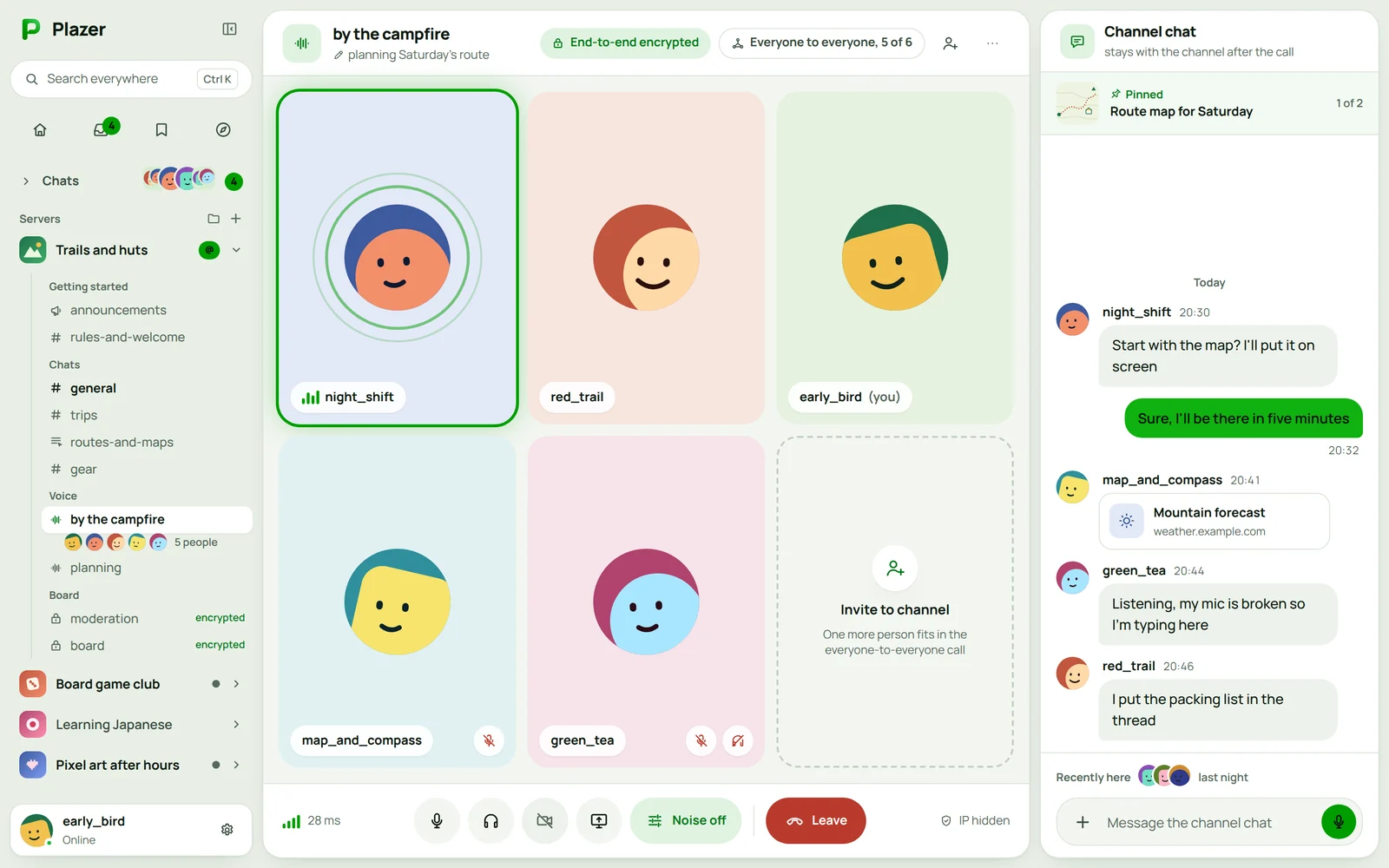
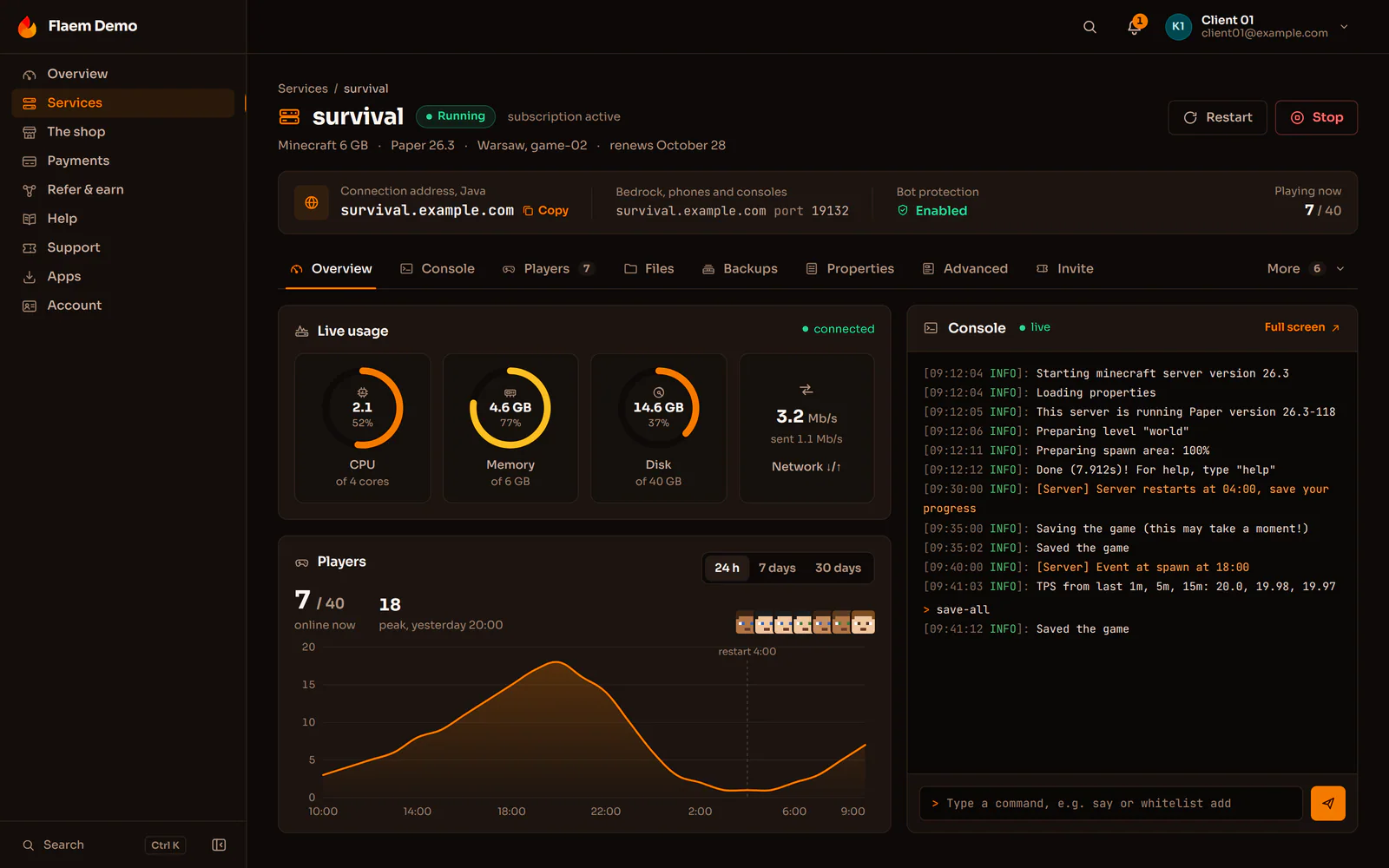
Flaem: container daemon
A fork of Pterodactyl Wings that runs Docker containers on a node.
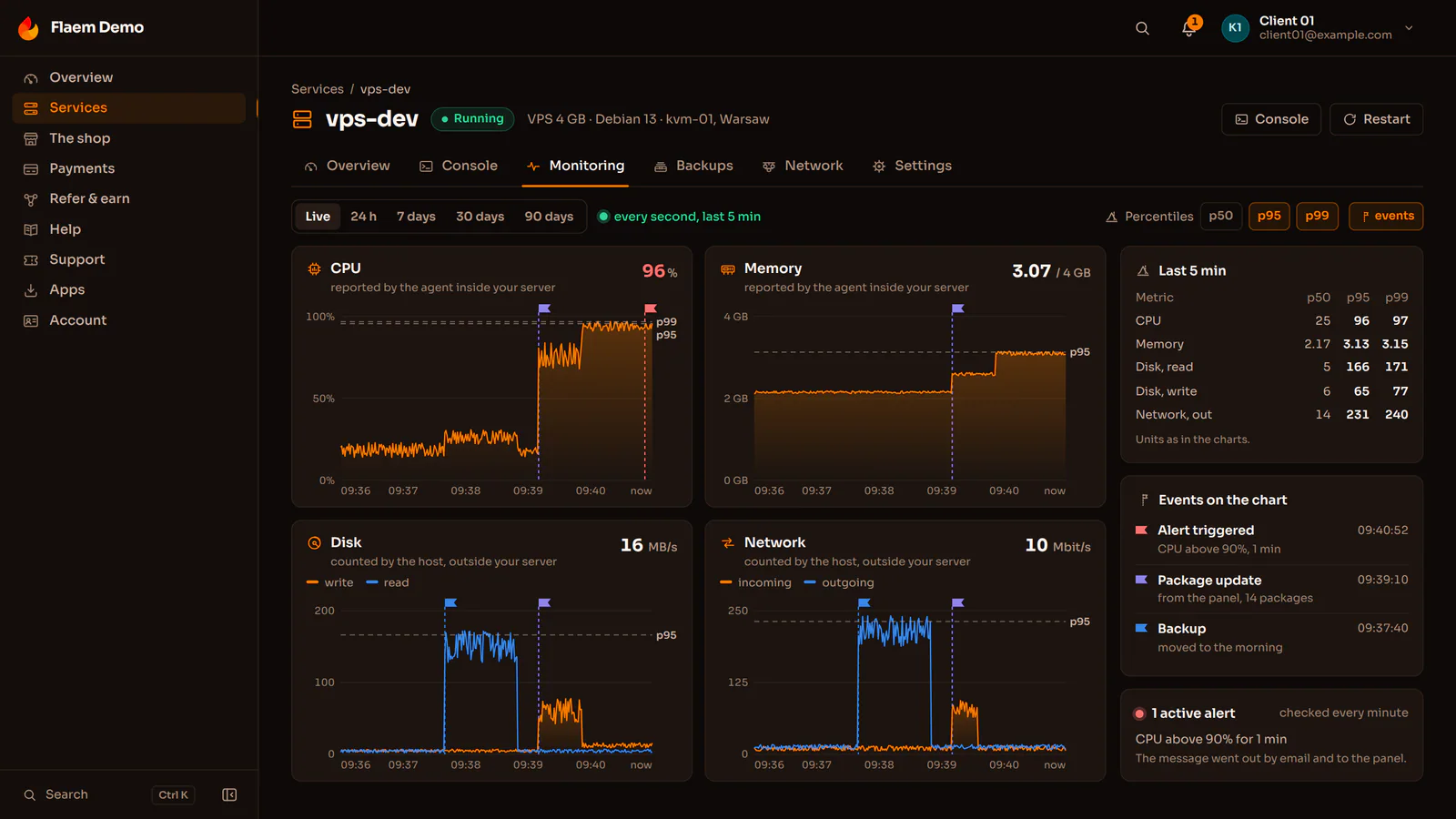
Flaem: telemetry
An in-memory sample store with several resolutions and disk checkpoints.
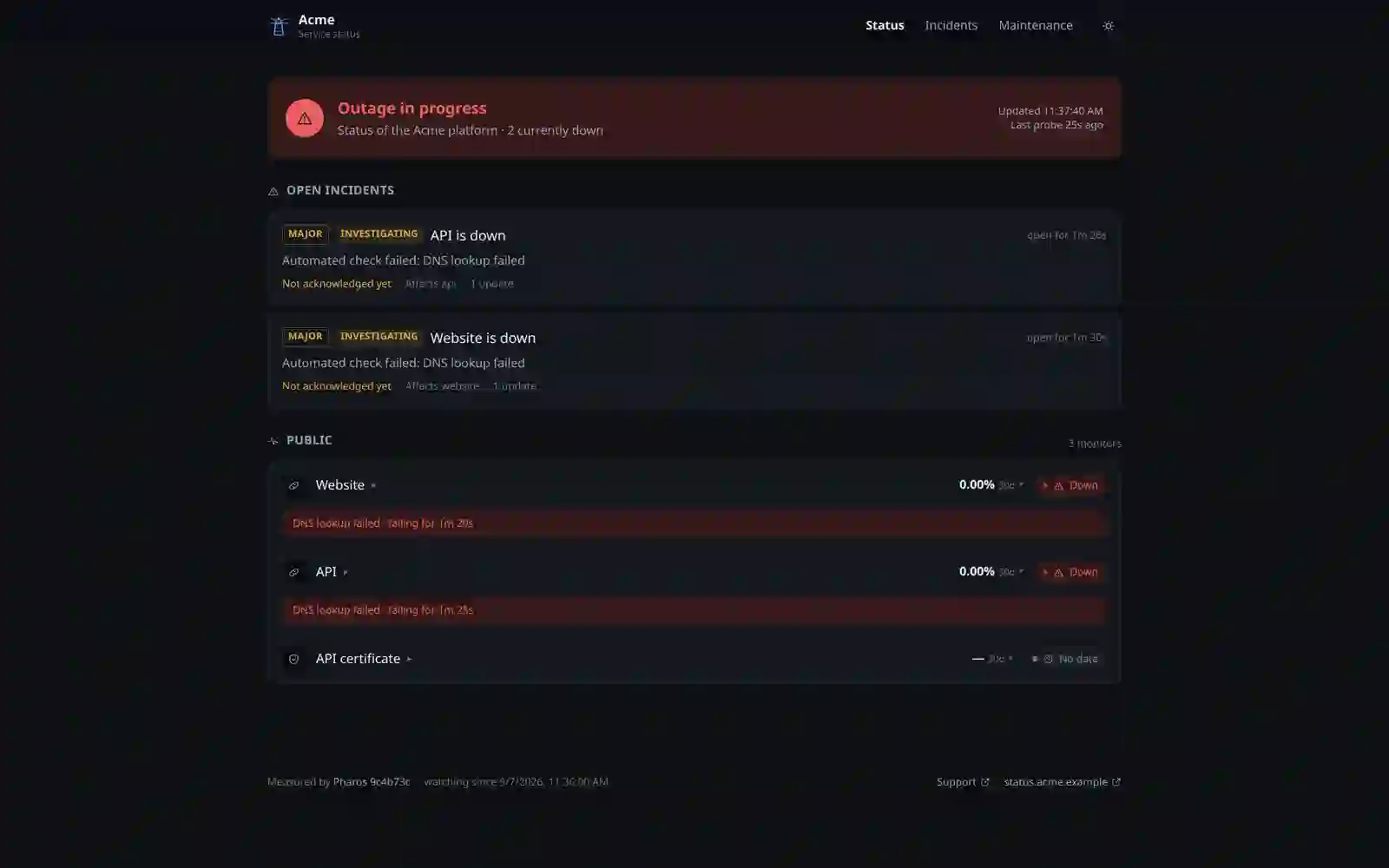
When Go, and when something else
A technology has to fit the place the code will run and the team that will take it over. The final choice is made in the quote, together with you.
We pick Go
Agents on client servers
The Flaem VPS agent and container daemon are single binaries with no runtime. A build for another system or processor comes from the same code by changing variables at compile time.
Services that must not hang
The context package carries a deadline through every call down the line, so the agent never waits forever on a service that has gone quiet. When the other side is down, the agent lengthens the gaps between attempts instead of flooding it with requests.
Live connections and voice
Plazer's hub and community server hold WebSocket connections and run voice calls over WebRTC with the pion library. Each connection is a light goroutine, not a separate system thread.
A server the client runs on their own hardware
Plazer's community server starts with one command from a Docker image, together with PostgreSQL and Redis. One Go program is easy to set up and update on a VPS, at home or on a local network.
Monitoring that works when the rest is down
Pharos is one Go program with an embedded SQLite database: it checks services over HTTP, TCP and TLS and runs a public status page. Monitoring must not depend on what it monitors, so it needs no separate database or services next to it.
Terraform and projects already written in Go
The Flaem Terraform provider is built on HashiCorp's official framework, which exists only in Go. The container daemon is a fork of Pterodactyl Wings and talks to Docker through its official Go client.
This is how we write it in our services
We pick something else
A panel with many screens
We write panels with forms, tables and charts in TypeScript and React. Plazer's web app talks to the Go hub through an API, and the Go services take care of data and connections.
Cryptography in the browser
Go compiled to WebAssembly carries its whole runtime along, so the module is heavy. Plazer's encryption is in Rust, which ships a light module to the browser.
Billing in a platform core
In Go a field nobody set holds its zero value, so a missing amount silently becomes zero. Flaem billing is in Rust, where a missing value has to be handled explicitly.
Supervising many processes
An unhandled panic in one goroutine ends the whole program. The router on Flaem nodes is in Elixir, because an OTP supervisor restarts only the broken part while the rest keeps running.
A bot or script that changes often
We write Discord bots and housekeeping scripts in Python. A fix goes in without a build, and discord.py has slash commands and panels ready.
A module for a hosting billing system
WHMCS, HostBill, Paymenter and Blesta load modules only in PHP. The Flaem modules for them are in PHP and talk to the platform through its API.
Then we reach for
Go compared, point by point
Each need on a row of its own, with what each of the two columns gives you on it side by side.
NeedGoRust
An agent on thousands of machines
Simple code, fast builds
Good too, slower to start
A WebRTC server
The mature pion library
Fewer ready tools
Development by a changing team
Easy to take over
Needs experience
Billing and amounts
Zero values have to be watched by tests
A missing value handled explicitly in the type
Build time
Short even in a large project
Noticeably longer
Cryptography in the browser
A heavy module with the whole runtime
A light WebAssembly module
A Terraform provider
HashiCorp's official framework
Only unofficial libraries
Go in all our code
How many lines we have written in Go, and what part of everything we have written that is. We count the lines added in the commits of our repositories, language by language.
The libraries these projects stand on
From the dependency files of our repositories. With each, one sentence on what we use it for.
pion/webrtc
Voice and video in Plazer.
go-chi, coder/websocket
The hub's HTTP and WebSocket.
pgx, go-redis, goose
PostgreSQL, Redis and migrations.
docker/docker
Container control on a node.
gRPC and protobuf
Contracts between the core and nodes.
terraform-plugin-framework
The Terraform provider.
Our changes to other people's Go projects
33 merged changes in 21 repositories. The maintainers of these projects reviewed our code and merged it into theirs.
Week by week
The languages of our changes
- Go33 26%
- PHP32 26%
- JavaScript25 20%
- C#11 8.8%
- Rust10 8.0%
- Perl i JavaScript6 4.8%
- Python6 4.8%
- TypeScript2 1.6%
- Versity GatewayAn S3-compatible object storage server that exposes a plain filesystem through Amazon's API.9 merged changes3,007 stars on GitHub
- EbitengineA 2D game engine in Go, used in games released for computers, phones and consoles.3 merged changes13,546 stars on GitHub
- chezmoiA dotfiles manager that keeps the same settings on many different machines, securely.2 merged changes21,895 stars on GitHub
- goqueryA Go library for traversing and changing HTML in the style of jQuery.2 merged changes14,989 stars on GitHub
- urfave/cliA declarative Go package for building command line tools.1 merged change24,287 stars on GitHub
- ConcourseA container-based CI/CD system written in Go.1 merged change7,915 stars on GitHub
Other technologies, and where their code runs
Each has its own page with projects on real screens and a comparison with the alternatives.

Questions about Go
Answers about Go, our projects and the numbers on this page.

Read next
Write-ups of the projects on this page and an overview of every technology.
A project in Go?
Describe what you want to build. We reply within an hour and tell you plainly whether this technology is a good choice.