VulCode

Multichannel selling: Allegro, marketplaces and your store

The same goods on Allegro, Erli, Amazon and your own store, with one stock level, one price list and orders in one place. We connect channels through a multichannel tool or directly, depending on how you sell.

Integrations
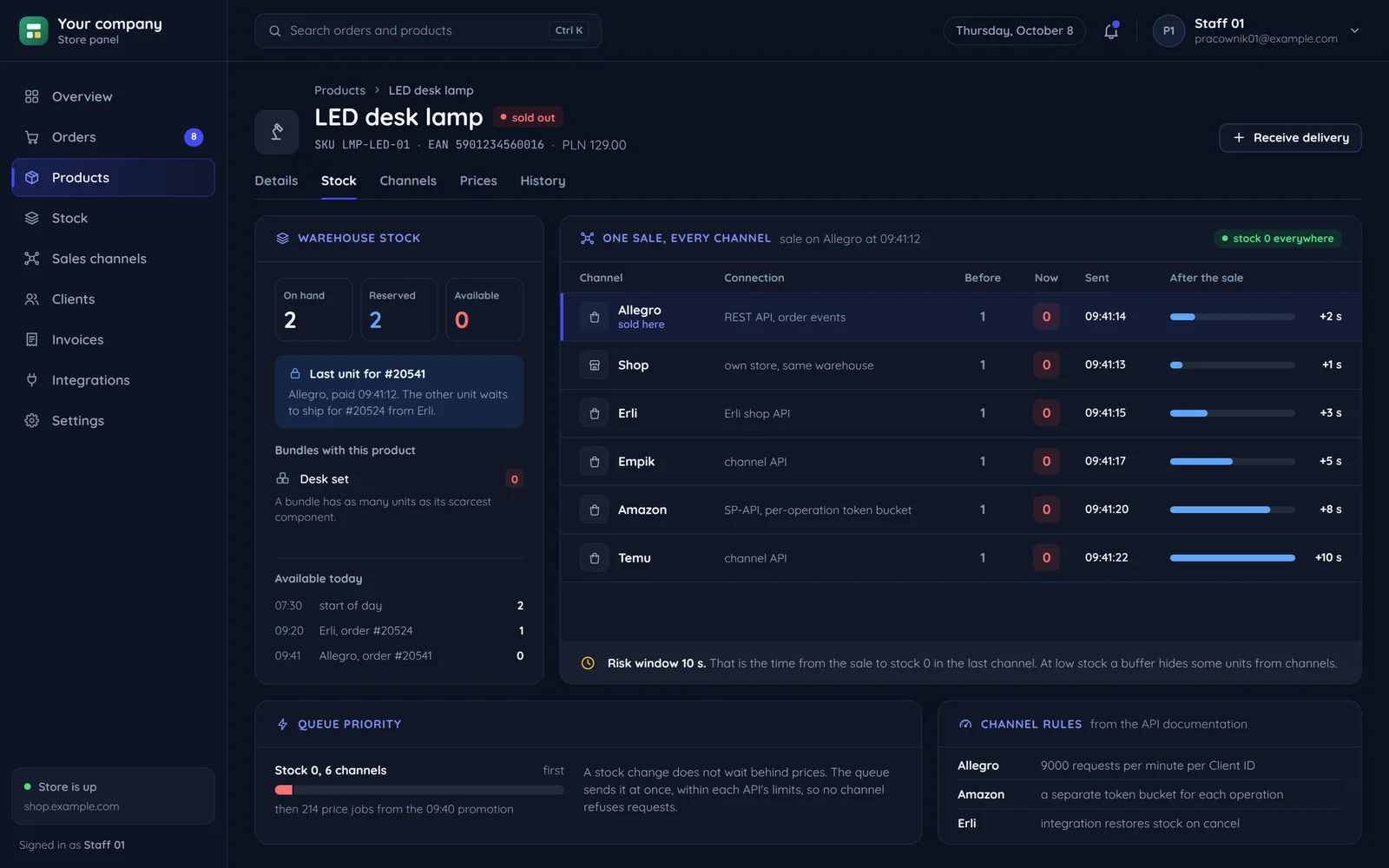
The store panel, the LED desk lamp sold out: the last unit sold on Allegro, stock 0 sent to six channels within 10 seconds, the bundle with this product, stock first in the queue and the channels' rules from their API documentation

How multichannel selling is layered

From sales channels down to the warehouse and accounting. The hub can live in a multichannel tool or in your own system.

In the channels

Allegro, Own store: the same item, one SKU

Channel

Any place you sell: a marketplace, a store, a B2B portal or a physical shop.

Where they meet

SKU and EAN

Your product code. It links the listing in every channel to one item in stock. The manufacturer barcode. Marketplaces often use it to match a product to their catalogue.

Under the order hub

Order hub

This is where orders meet in one place and stock spreads out to every channel.

The hub can live in

Warehouse and shipping

Stock, labels, couriers. More: Couriers and shipping.

Accounting

ERP or an invoicing app, KSeF. More: Invoicing and ERP.

One rule to start with

  • Each kind of data has one source of truth: stock usually in the warehouse, prices in the ERP or the order hub.
  • Channels only receive stock and prices, and hand back orders.
  • That way adding another channel does not change the rest of the layout.

Channels and systems we connect

Each has its own page with its API, limits and a sample rollout.
One stock level, one price listorders in one place
  • Allegro

    REST API, order events.

    How we test: the Allegro sandbox

    • Orders
      AllegroOne stock level, one price list
      order events
    • Stock and prices
      One stock level, one price listAllegro
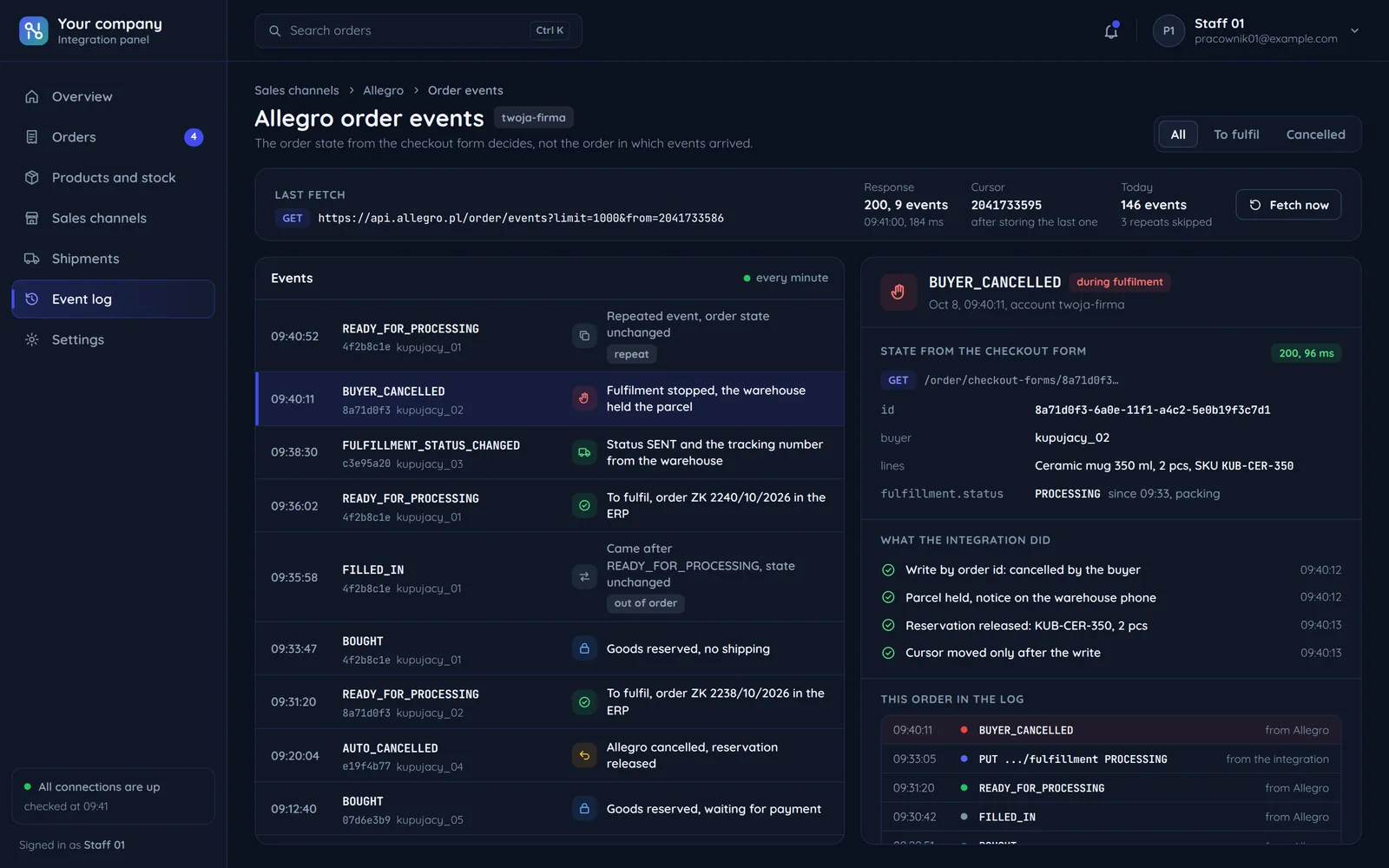
    A sample screen from the Allegro page: Allegro order events in the integration panel
  • BaseLinker

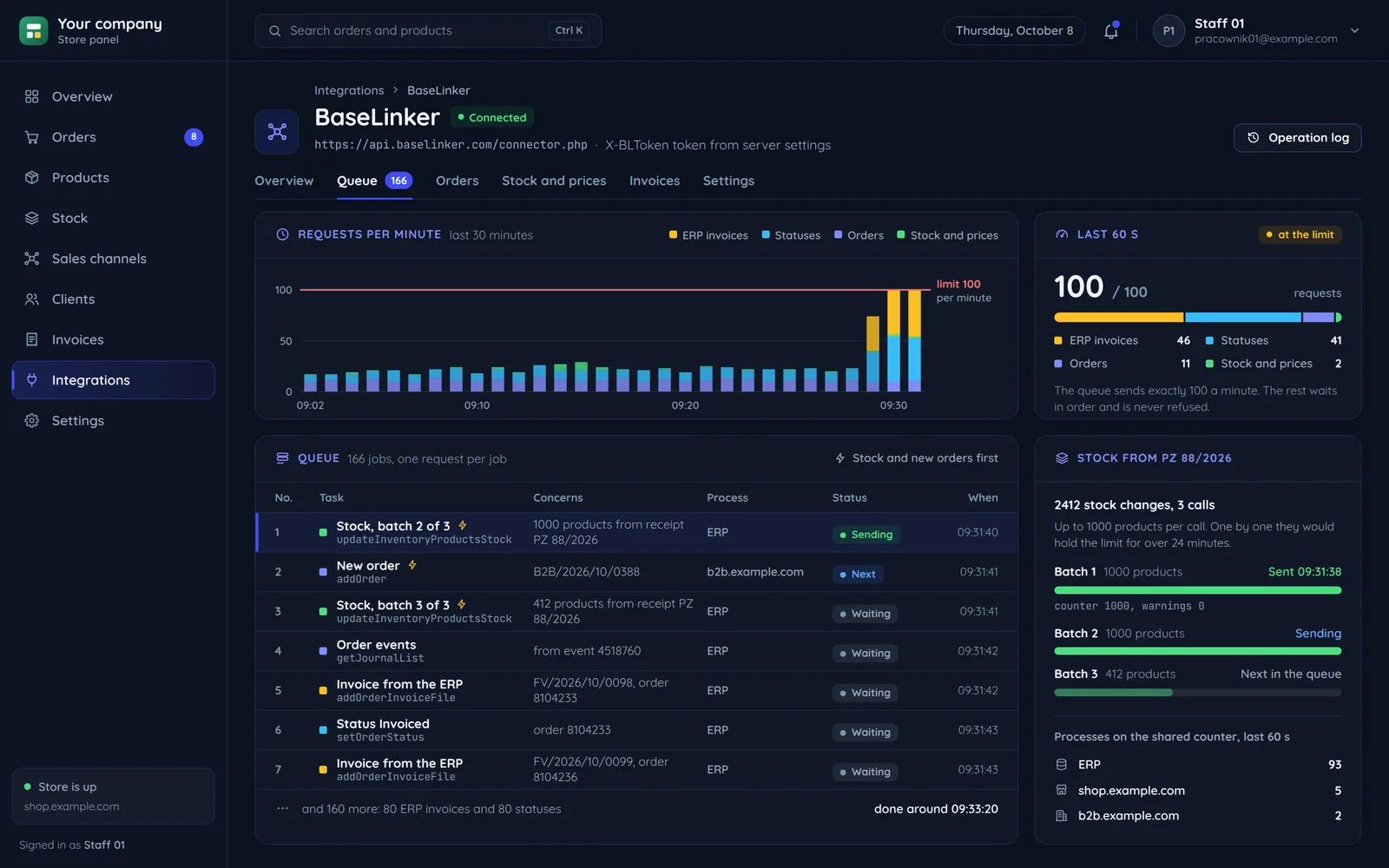
    Order hub, 100 requests per minute, a token header.

    How we test: tests on a data copy before launch
    • Orders and statuses
      BaseLinkerOne stock level, one price list
      a 3-day event journal
    • Stock and prices
      One stock level, one price listBaseLinker
      batches of up to 1000 products
    A sample screen from the BaseLinker page: the job queue within the request limit
  • Apilo

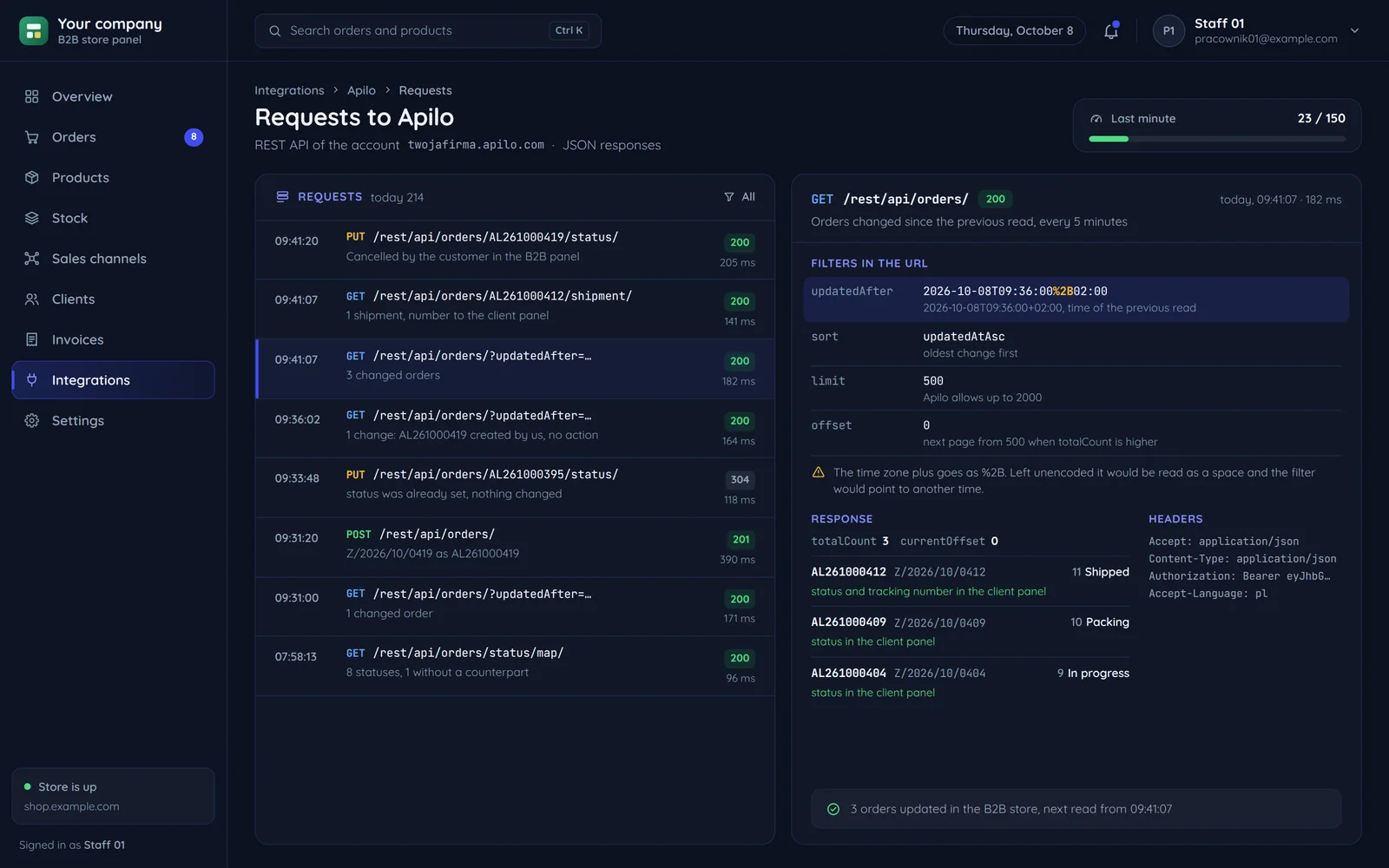
    REST API with OAuth, OAuth with refresh.

    How we test: read-only requests first, writes in stages
    • Orders and statuses
      ApiloOne stock level, one price list
      date filters
    • Shipments and documents
      ApiloOne stock level, one price list
    A sample screen from the Apilo page: requests to the Apilo REST API
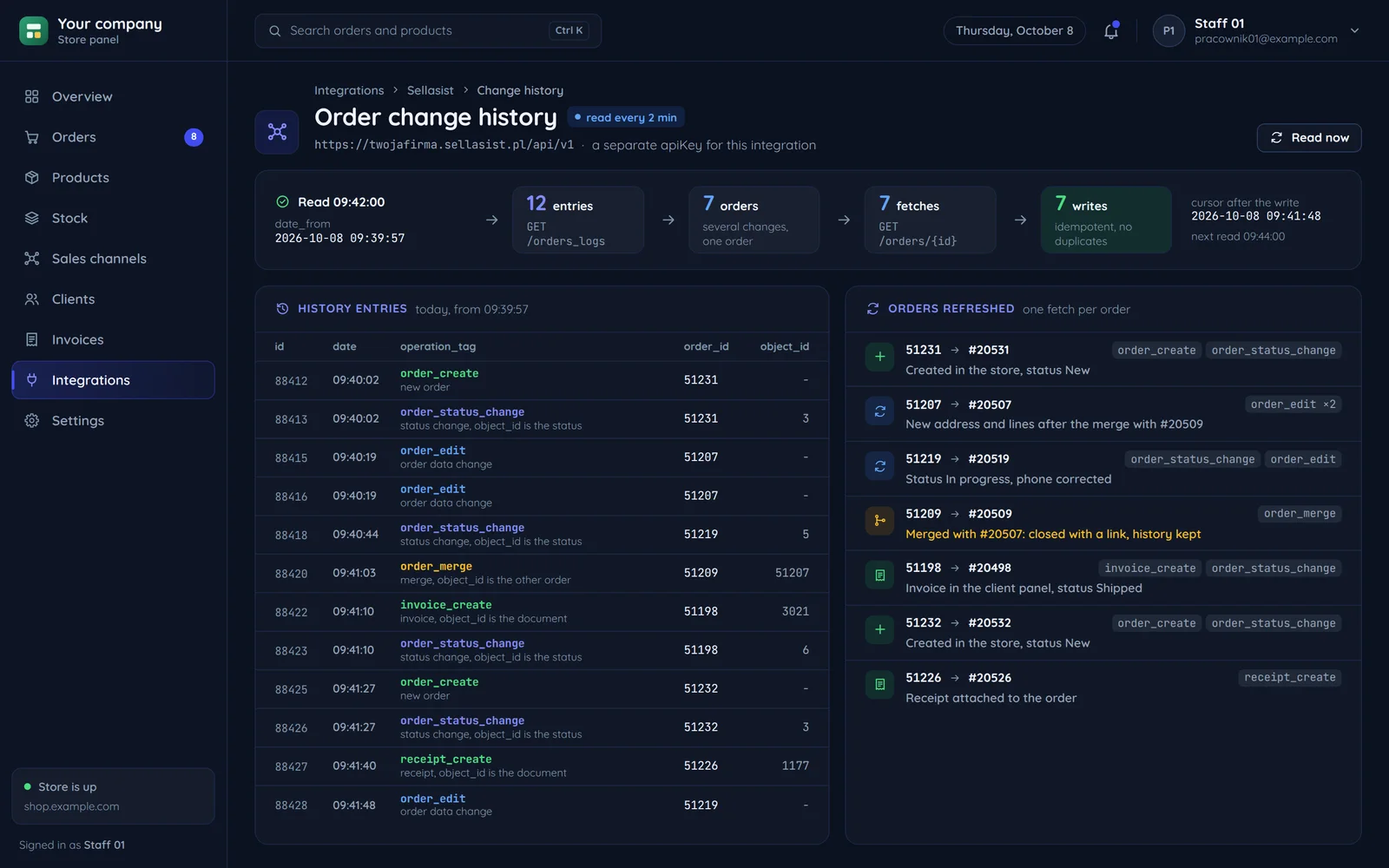
  • Sellasist

    REST API, change history, an API key header.

    • Marketplace orders
      SellasistOne stock level, one price list
      a change history
    • Stock
      SellasistOne stock level, one price list
      per the agreed source of truth
    A sample screen from the Sellasist page: the order change history
  • Erli, Empik, Amazon, Temu

    Directly or via an integrator.

    • Orders
      Erli, Empik, Amazon, TemuOne stock level, one price list
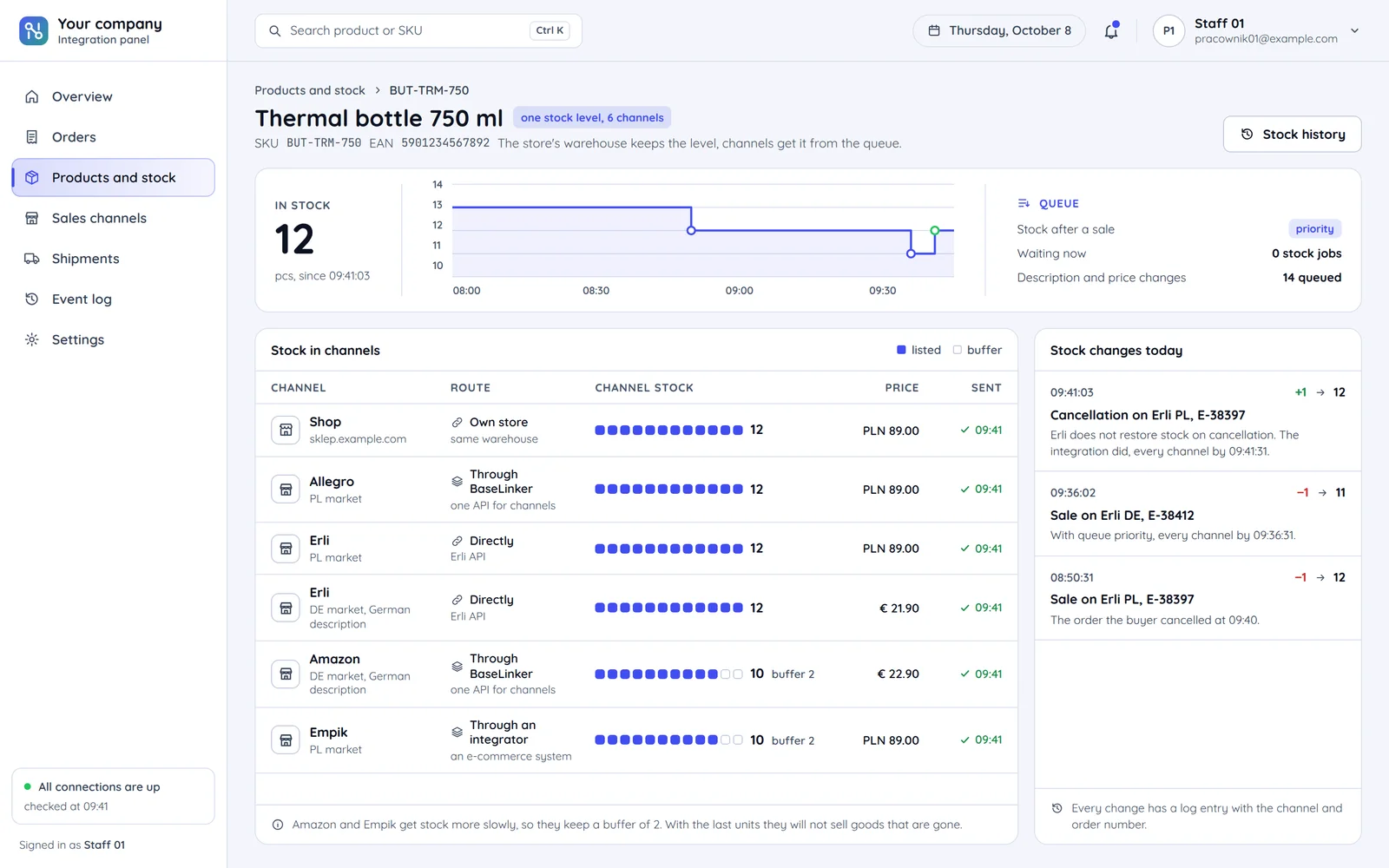
    • Stock
      One stock level, one price listErli, Empik, Amazon, Temu
      on Erli the integration restores stock after a cancellation
    A sample screen from the marketplace page: one product stock in six channels

One sale, every channel

What happens when the last unit sells on Allegro. The fulfilment status and shipment then go back to Allegro.

  1. Allegro → Order hub
    Order paid
    09:41:12, order #20541
  2. Order hub → Warehouse
    Reserve the last unit
  3. Warehouse → Order hub
    Stock 0
  4. Order hub → Other channels
    Stock 0 on every channel
    A priority queue job, within each API's limits
the channel still shows 1 unitstock 0 in the channelafter the update
sale at 09:41:12
  1. Store09:41:13
    0+1 s
  2. Allegro09:41:14, sold here
    0+2 s
  3. Erli09:41:15
    0+3 s
  4. Empik09:41:17
    0+5 s
  5. Amazon09:41:20
    0+8 s
  6. Temu09:41:22
    0+10 s
Risk window: 10 s
  • The risk window

    A moment passes between a sale and the stock update elsewhere. With low stock we set a buffer so nothing sells twice.

  • First in the queue

    At peak the queue has to fit every API's limits, with stock updates going first.

  • Reservation

    Stock held for an order before it leaves the warehouse.

A multichannel tool or your own hub

Most firms are fine with a ready tool. An own hub makes sense when selling is the core of your product.

You sell on several channels

Where should the order hub live?

A ready multichannel tool

When
  • You sell on popular channels and platforms.
  • You need labels, messages and documents from day one.
Verdict

BaseLinker, Apilo or Sellasist, with your store or ERP connected through one API.

Your own order hub

When
  • You have your own platform or wholesale system where selling is the product.
  • You need rules and data ready tools do not store.
Verdict

A module in your system that talks to channels directly through their APIs.

The most common causes of stock mismatches

We have seen each in documentation or in integration practice. The screens show product links across channels and an order cancelled on Erli.

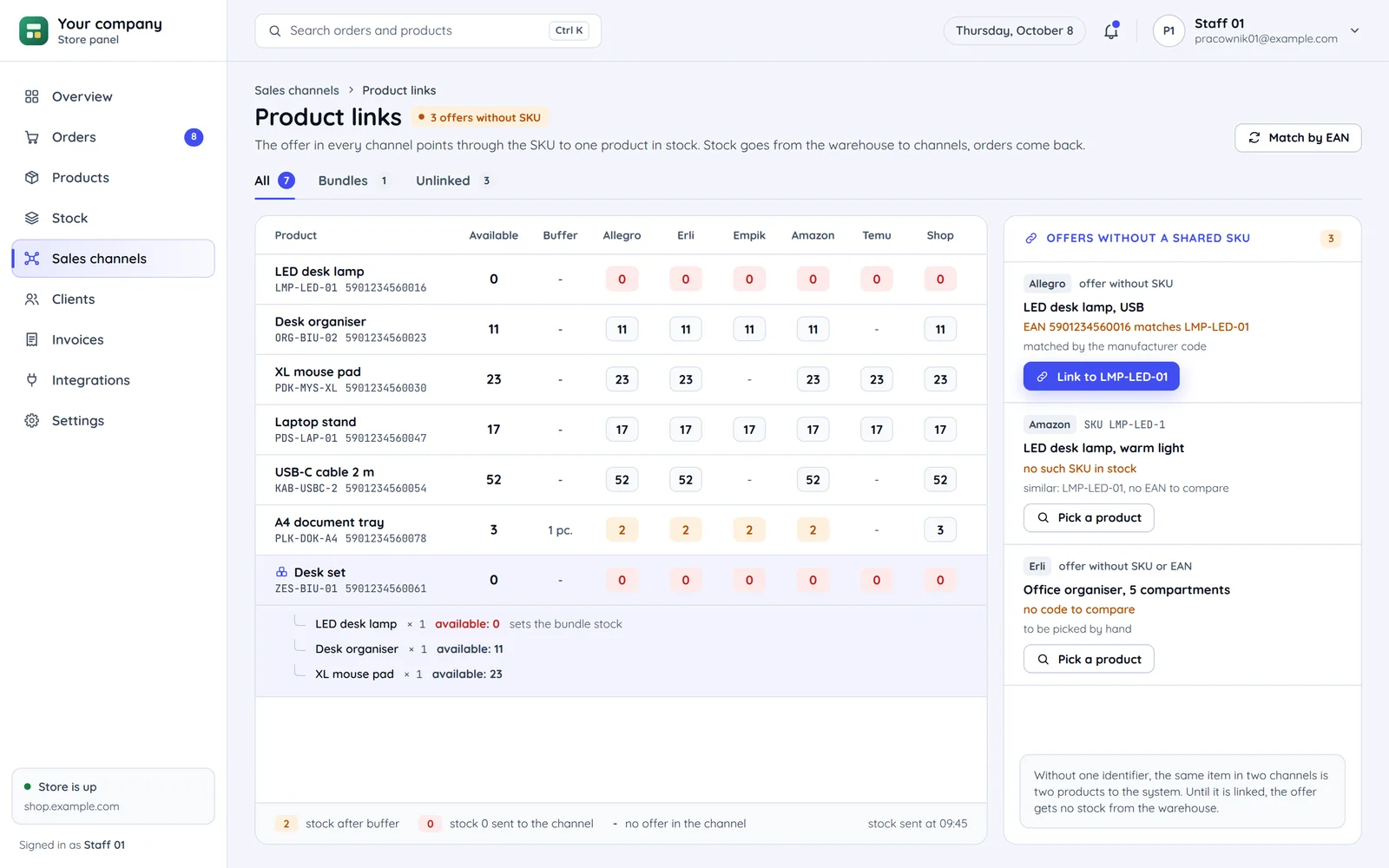
Product links in the store panel: each product's stock in six channels, a one-unit buffer, a bundle whose stock is set by its scarcest part and three offers without a shared SKU to link
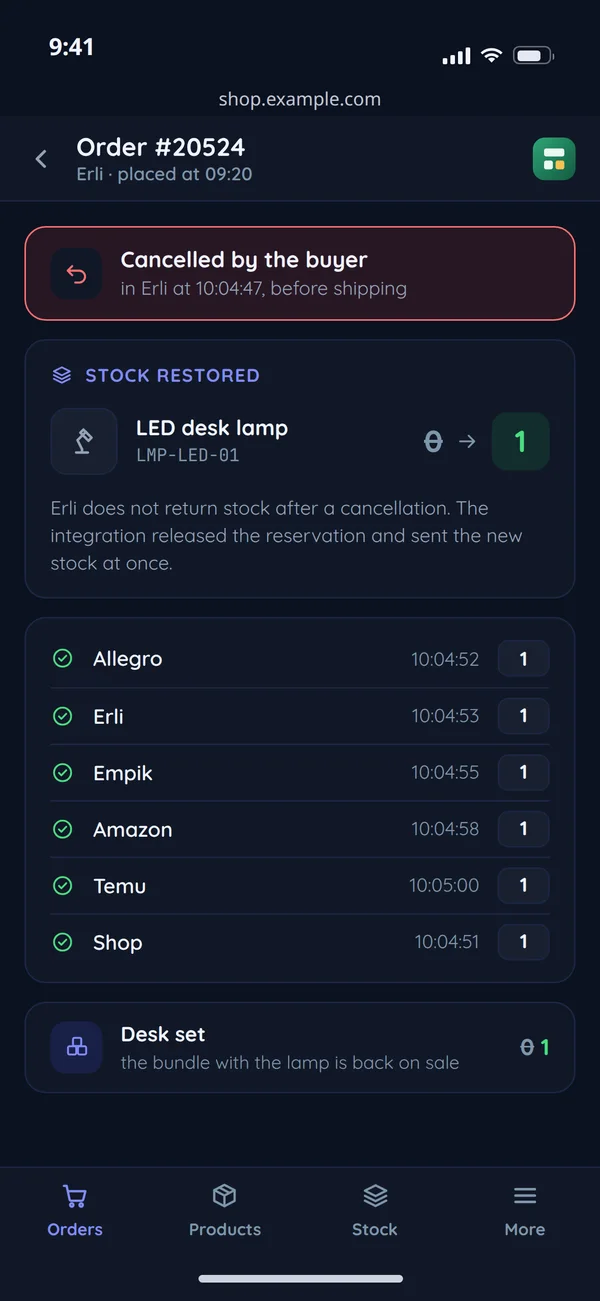
An Erli order cancelled by the buyer before dispatch, on a phone: the lamp's stock put back from 0 to 1 by the integration and sent to six channels, the bundle with the lamp back on sale
  • No shared SKU

    Without one id, the same item in two channels is two products to the system.

  • Variants and bundles

    Selling a bundle must lower its components' stock, or the warehouse disagrees with the channels.

  • Stock buffer

    A few units hidden from channels so an update delay does not end in selling stock you lack.

  • Cancellations and returns

    Each channel returns stock differently after a cancellation. On Erli the integration restores stock after a cancellation.

Common questions about multichannel selling

Answers about choosing a tool, selling without one, overselling and the quote.

How many sales channels do you have today?

Tell us where you sell and where you keep stock. We will reply within an hour with a proposed layout and a quote.