
The 3-2-1 rule, from the Data Backup Options paper published by the US agency CISA, says: keep three copies of any important file, the primary and two backups, on two kinds of media, with one copy off-site. A business holding customer data is also bound by GDPR Article 32(1), which lists the ability to restore personal data quickly after an incident and regular testing of the safeguards.
3-2-1 for a business with a store or a panel
| Part of the rule | What it means in practice |
|---|---|
| 3 copies | the database and files on the server, plus two backups |
| 2 kinds of media | the server's disk and a separate backup store |
| 1 copy off-site | a copy in another location, outside the account the server runs under |
What KSeF will not keep for you
Structured invoices sent to KSeF, Poland's national e-invoicing system, are kept there for 10 years from the end of the year they were issued in (Article 112aa of the Polish VAT Act). KSeF holds no orders, customer accounts, product photos or contracts, so that data needs a backup of its own.
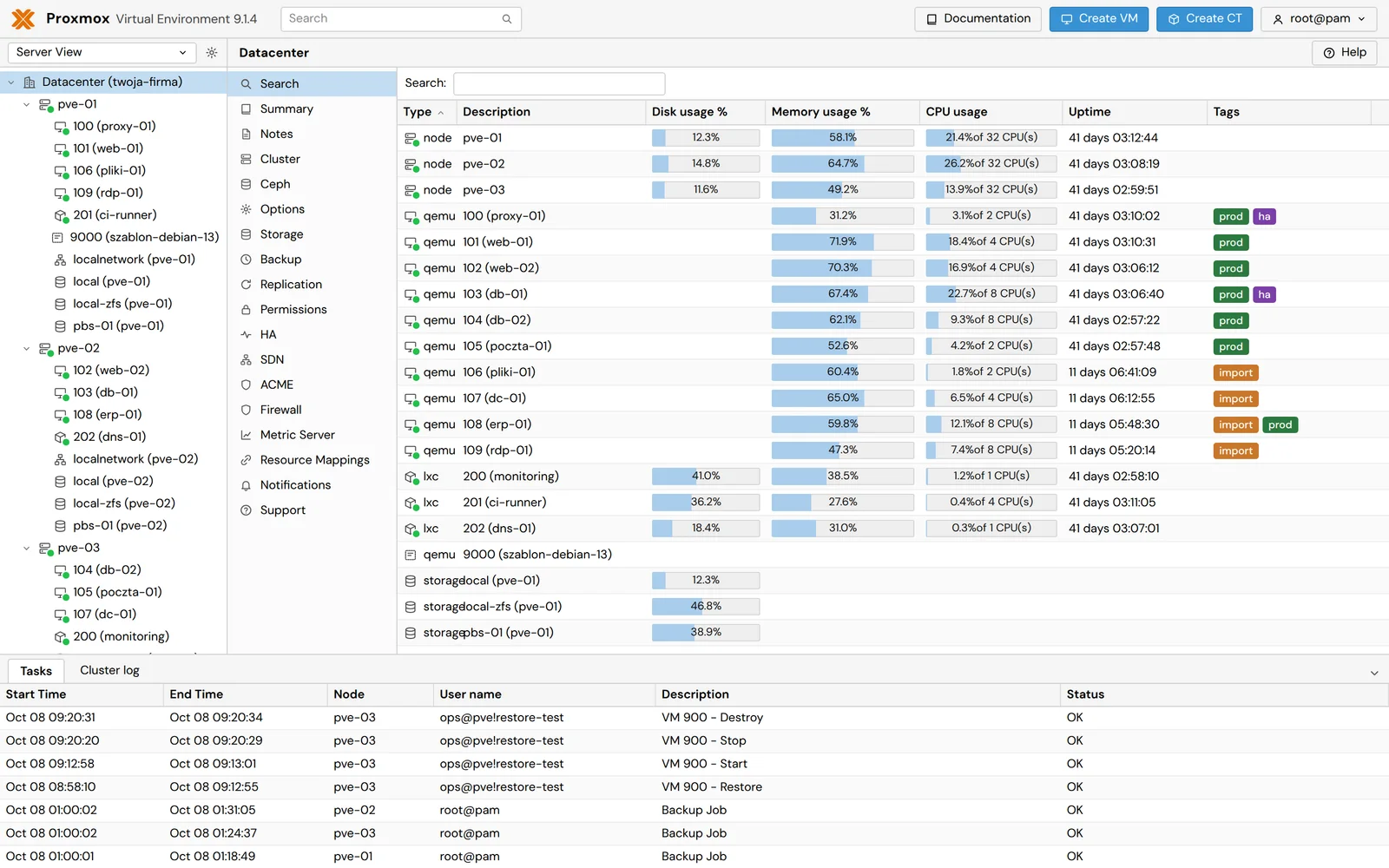
On the servers we set up, backups sit off the server, and under a maintenance plan we check that a backup restores before anyone needs it. After every successful nightly backup a script signals the monitoring, and when no signal arrives for 26 hours, the monitor raises an alarm. Taking over a project from another vendor, we start with a backup and a restore check.
A database restore test is in our post on monitoring and maintenance after launch, and backups in a care plan on our maintenance page.
Was this post helpful?